When a supplier quotes a minimum order quantity that is four times your plan, the useful question is not whether they will lower it. It is which cost the minimum is protecting. MOQ is almost always attached to a specific expensive step, and once you know which step, you can often move it rather than pay to cross it.
Where the minimum actually comes from
A quoted minimum sits on top of one or more fixed costs. For tools, those costs are predictable and they are not all the same size.
- Printing and packaging. A retail colour box with your artwork carries a plate or print setup cost and a minimum print run that often exceeds the tool minimum.
- Moulding and colour. A custom housing colour means a minimum batch of material and a cleaning run on the machine. Standard colours have no such threshold.
- Tooling. A new mould or a housing modification has a one-off cost that must be amortised over the first run.
- Component sourcing. A non-standard cell, charger or switch may carry its own minimum from the component supplier.
- Assembly line changeover. Small, but real, and it is why a mixed small order can price worse than a single-item larger one.
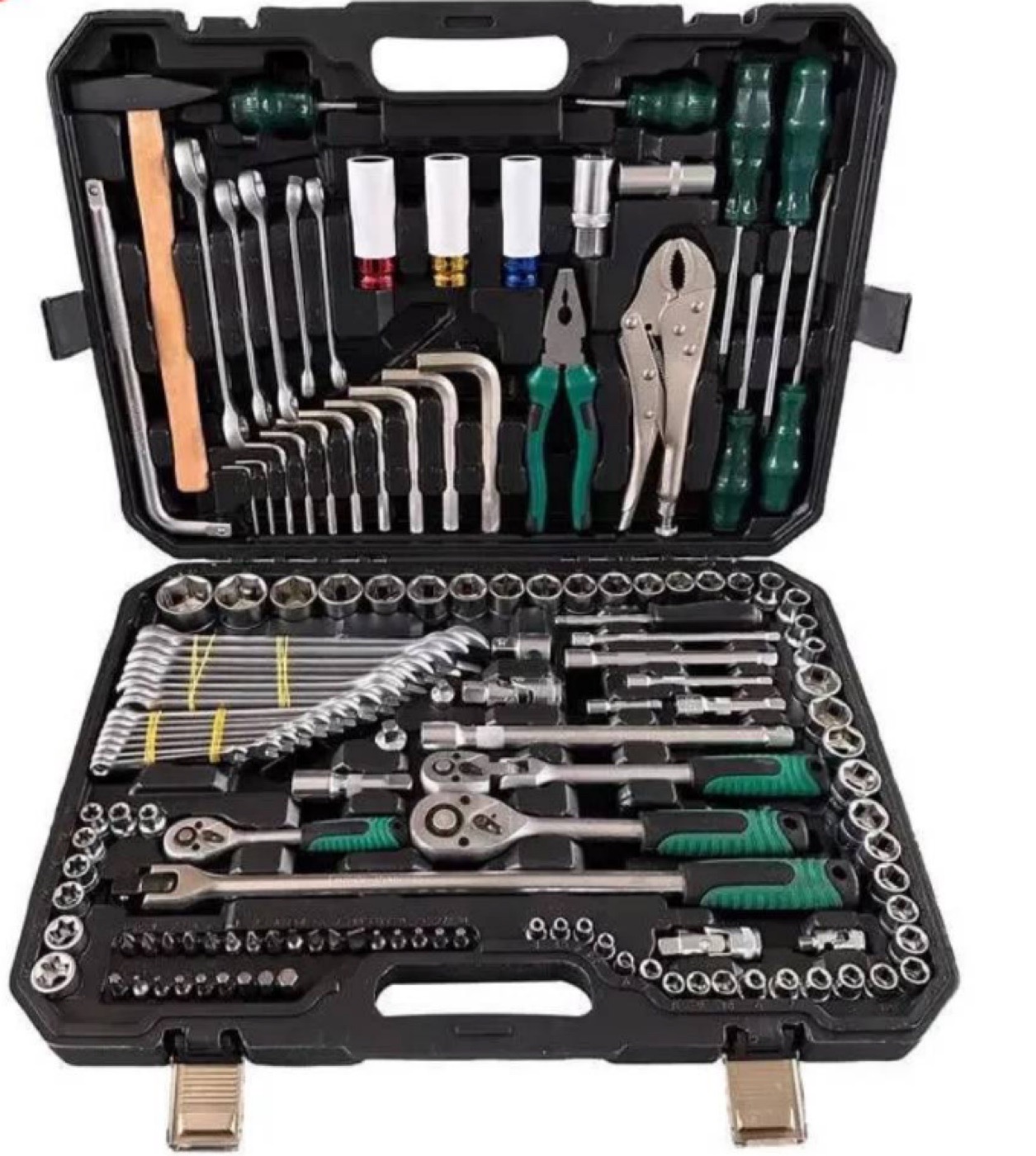
A household tool set quoted at US$18-30 per set with a 50-set minimum is usually being held up by the packaging, not the tools. The same family of product in a plain export carton frequently clears at a much smaller quantity, because the fixed cost disappears.
Every MOQ is a fixed cost divided by a quantity. Change the fixed cost and the minimum moves. Argue about the quantity and it does not.
Six levers that actually move the number
These are the levers worth raising, in the order that usually costs you least.
- Take the standard packaging for the first order and print your own carton on the second. This is the single most effective lever, and it costs you nothing but a later design change.
- Accept a standard housing colour for the pilot run. Reserve your custom colour for the repeat order, when the batch is large enough to absorb the material minimum.
- Consolidate SKUs. Four models at 50 each is a different conversation from one model at 200. If your market can support a narrower opening range, buy depth instead of breadth.
- Offer a higher deposit or full payment on a small trial run. Suppliers discount risk, not just volume, and a first order with no balance exposure is genuinely cheaper to serve.
- Accept a longer lead time so your order can be scheduled alongside an existing production run. This is common and rarely offered unless you ask.
- Take a stock model that already exists rather than a modified one. A tweak to the housing or the accessory list can reintroduce a tooling or sourcing minimum you just avoided.
What you are giving up, and when it is worth it
Lowering MOQ is never free, even when it does not show up in the unit price. The hidden costs are range, timing and control.
Buying depth over breadth means your opening range is narrower, which may cost you listings or shelf space. A longer lead time means less ability to react to a season. Standard packaging means your first shipment looks generic, which matters if you are selling into a retail channel that expects branded boxes on day one.
For a test order, all three are acceptable. For a launch into a retail chain, none of them are. Decide which situation you are in before you start negotiating, because the supplier will optimise for whichever answer you give.
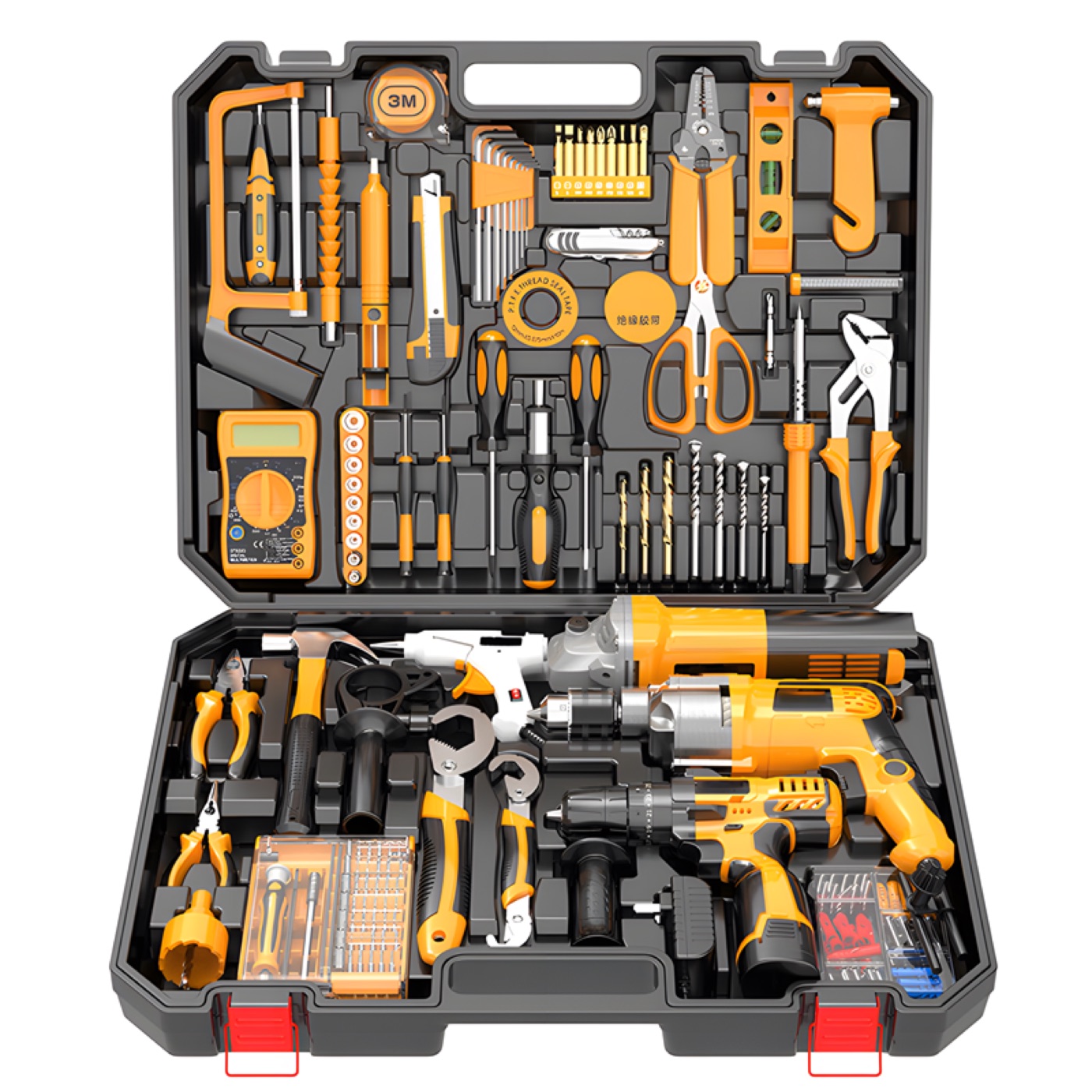
A practical middle path: split the order by product rather than by quantity. Take a small quantity of a hero item that can carry plain packaging, and a larger quantity of a simple accessory or a set that clears its minimum naturally. An 118PCS manual and power tool combination set at US$85-93 per set with a 10-set minimum can absorb the volume in a way that a fully customised single tool cannot, and it ships in the same container.
Why the same product quotes at three different minimums
Buyers frequently collect quotes for what looks like an identical tool and receive minimums of 10, 100 and 500. That gap is usually not arbitrary. Three different things sit behind it.
First, the supplier may be quoting a stock model in a standard colour, which is already in production and can be added to a running batch. That is the true low-minimum case and it is worth taking. Second, the supplier may be quoting a model they build periodically and can schedule, which produces a middle minimum and a lead time measured in weeks rather than days. Third, the supplier may be quoting a model they would build to order, where the minimum is covering a full production run and cannot move without a price increase.
Ask which of the three you are being quoted. Suppliers answer this honestly because it is a scheduling question, and the answer tells you whether negotiating quantity is even the right move. If you are in the third case, no amount of negotiation will produce a small order at the quoted price, and the correct response is to pick a different model rather than push for a discount that has to be recovered somewhere else.
A negotiation script that works
Ask the question in cost terms, not in quantity terms. Instead of asking whether the minimum can be reduced, ask which fixed cost is setting it, and what would happen to the price if you removed that cost. Suppliers answer this precisely, because it is a production question rather than a discount request.
Then state your constraint plainly: your first order is a market test, you expect a repeat order within a defined period if the product performs, and you are willing to accept standard packaging and a longer lead time to get there. That is a credible first order, and it is priced differently from a request to buy fifty units of a fully customised tool.
Finally, get the price breaks in writing for the quantities you actually expect to reach. A quote that only covers the minimum tells you nothing about your margin at the second order, and the second order is where the money is.