Agricultural hand tools look like the simplest category in a hardware catalogue. A sickle is a blade on a handle. A hoe is a plate on a handle. There is no battery, no motor, no electronics to certify. Yet this is one of the categories where importers most often destroy their own margin, because the demand is not spread across the year and the supply chain is not fast enough to respond to it.
A buyer who orders sickles in the month the harvest starts has already lost. The container will arrive after the window has closed, the stock will sit for eleven months, and the price achieved will be whatever the market offers when everyone else is trying to clear the same inventory. The category rewards planning, and the planning is calendar work rather than negotiation work.
Demand follows the planting and harvest calendar, not the retail calendar
Hand tools are bought by growers and by small dealers who serve them, and both buy in the weeks before they are needed. That produces two peaks in most temperate markets, one ahead of land preparation and planting, and one ahead of harvest. The exact months shift with latitude, crop mix and rainfall, but the shape holds: demand is concentrated, it is short, and it is unforgiving of late arrivals.
The implication for an importer is that the purchasing decision and the selling season are separated by the length of the supply chain, not by a few weeks. Production, inland transport, sea freight, customs clearance and onward distribution together occupy a meaningful part of a quarter. Back-planning from the season is the only way to make the arrival date a decision rather than an outcome.
A working annual rhythm
- Twelve to sixteen weeks before the season: confirm model mix and place the production order. This is the window where tooling, handle length, blade steel and packaging are still negotiable at no extra cost.
- Eight to ten weeks before: production complete and inspection done, with the carton marks approved before the container is stuffed rather than after.
- Six to eight weeks before: vessel booked and documentation prepared, allowing for the possibility of a rolled booking in peak freight periods.
- Four weeks before: goods cleared and in the warehouse, with a buffer that absorbs a customs query without emptying the shelf.
- During the season: sell from stock and monitor which models actually move, rather than reordering the whole range.
- Two to four weeks after the season: review sell-through by model, and adjust the next cycle's mix while the data is still fresh.
The buffer in the fourth line is the one importers most often cut in order to save working capital. It is also the one that decides whether a season is profitable, because a shipment delayed by a documentation query during the exact week demand peaks cannot be recovered later.
Two hemispheres, one production schedule
Selling into both northern and southern hemisphere markets is the standard way to smooth a seasonal business, but it changes the production plan rather than removing it. The two seasons are roughly opposed, which means the same factory slot can serve one market's pre-planting demand and another market's pre-harvest demand within the same year. What it does not do is allow a single order to serve both, because the models, handle lengths and packaging frequently differ.
Practically, the smooth version requires two order cycles a year on the same production relationship, and it requires that the second cycle is planned before the first has finished selling. Importers who treat the second season as a copy of the first usually discover that the model that sold well in one market is the wrong blade profile or the wrong handle length in the other.
What the price bands tell you about the order
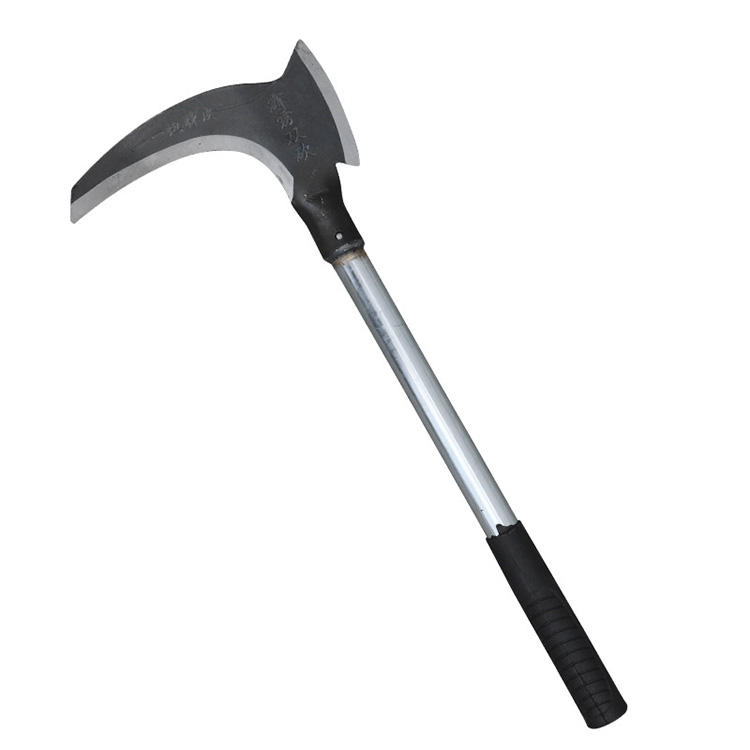
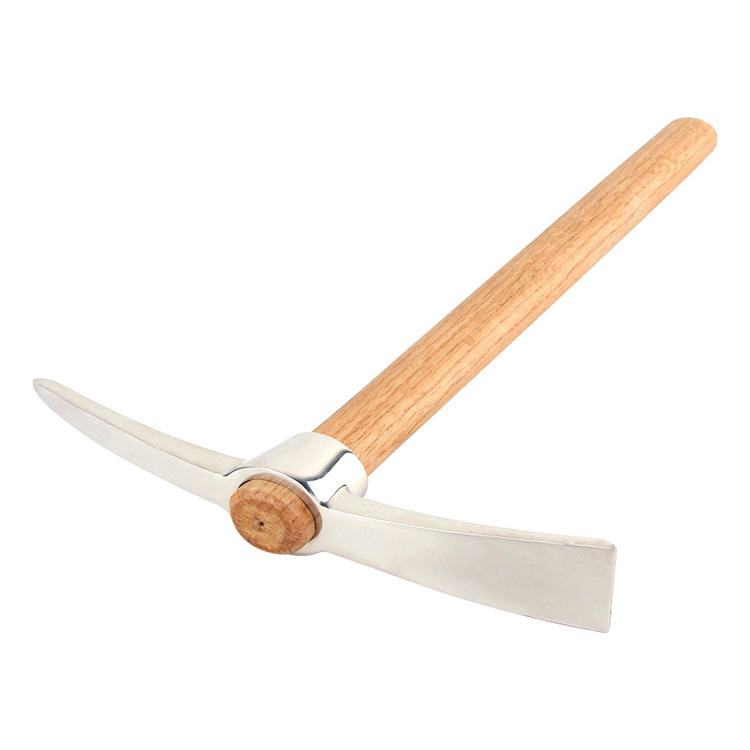
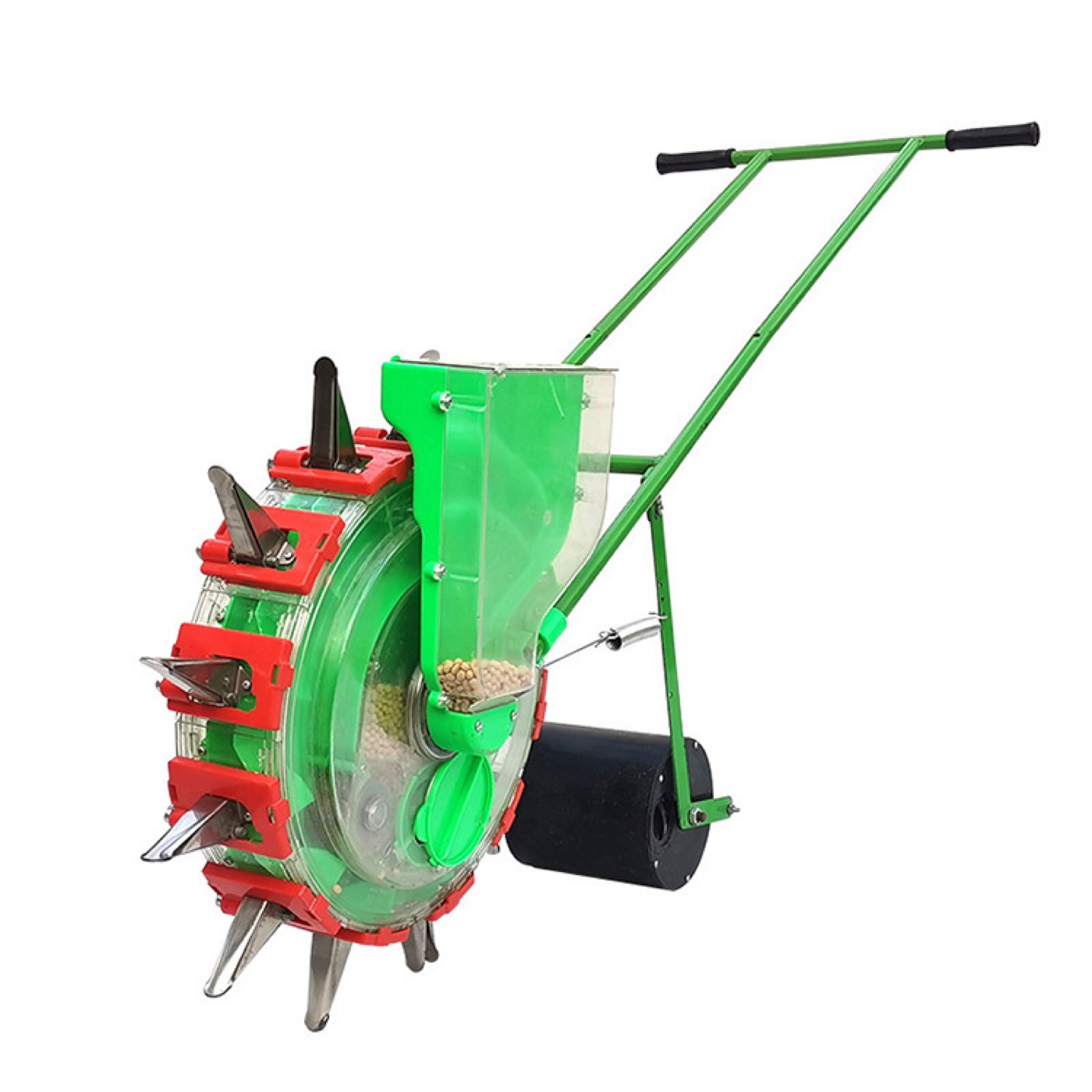
Agricultural hand tools split into clear weight classes, and the price bands map onto them directly. A high manganese steel multi-functional sickle for weeding is commonly quoted at US$0.35 to US$0.80 per unit at a twenty-unit minimum, which is a light forged blade with a simple handle. An agricultural digging hoe with a wooden handle sits around US$0.95 to US$1.10 at a twenty-unit minimum, reflecting a heavier head and a longer haft. A hand push corn and soybean seeder with a fertilizer attachment is a different class entirely at US$29.00 to US$32.00 with a five-set minimum, because it is a mechanism rather than a blade.
Those numbers matter for order planning because the low-value items cannot absorb freight individually. A container of sickles is economical only when the cartons are densely packed and the value per cubic metre is high enough to justify the slot. A container that mixes cheap blades with seeders and tillers usually performs better, since the mechanism lines carry the freight and the blade lines carry the breadth.
In seasonal tools, arriving four weeks early costs a little storage. Arriving four weeks late costs the season.
Quantities for a window, not for a year
Ordering twelve months of stock to chase a lower unit price is usually a mistake in this category, because the money is tied up for the eleven months the tool is not selling and the risk of a model that does not move is concentrated in one decision. A better pattern is to size the first order to the season plus a modest buffer, then use the post-season review to decide whether the second order goes deeper on the proven models.
The exception is where the minimum order quantity forces the issue. When a supplier's minimum is far above what one season can absorb, splitting the shipment across two markets or two seasons is usually better than discounting the surplus locally, provided the packaging can be made market-neutral.
A pre-season checklist
- Season start date confirmed for each destination market, not assumed from last year.
- Production lead time and vessel transit time added together and checked against that date with a buffer.
- Model mix split by weight class, so cheap blades and mechanism lines share the freight sensibly.
- Handle length and blade profile confirmed per market rather than carried over from the previous order.
- Carton marks and packaging approved before production ends.
- Sell-through review scheduled for immediately after the season, before the next order is placed.
- Spare blades and replacement handles considered as a low-cost add-on line for the following season.
The category does not reward clever negotiation as much as it rewards an accurate calendar. Getting the container into the warehouse three weeks before the season opens is worth more than a few percent on the unit price, and it is entirely within the buyer's control.