Most first orders go wrong before anyone quotes a price. The buyer sends a category, not a product, and receives four prices that cannot be compared, each attached to a different tool. Three weeks later the sample arrives and nobody can say whether it matches what was ordered. This is the sequence we would follow if we were placing a first tool order ourselves, written for importers who have not bought tools from China before.
Before the first email: define the order you are actually placing
A supplier can only quote what you describe. Write down five things before contacting anyone, and keep them fixed for every supplier you approach in the same round. Changing them between suppliers is the single most common reason quotes come back incomparable.
- Product type and one reference model. Not 'cordless drill' but '18V or 21V cordless drill driver, 13mm chuck, two batteries, 45Nm or above'.
- Target retail or wholesale price. This tells the supplier which cost tier to quote, and it tells you early whether your plan is realistic.
- Order quantity per SKU, and whether you can commit to a repeat order. A first order of 200 pieces with a stated second order is a different conversation from 200 pieces once.
- Certification and market. Where the goods will be sold decides the plug, the voltage, the labelling language and the documentation set.
- Packaging expectation. Plain export carton, retail colour box, or your own printed artwork. This alone can move the unit price by a meaningful margin.
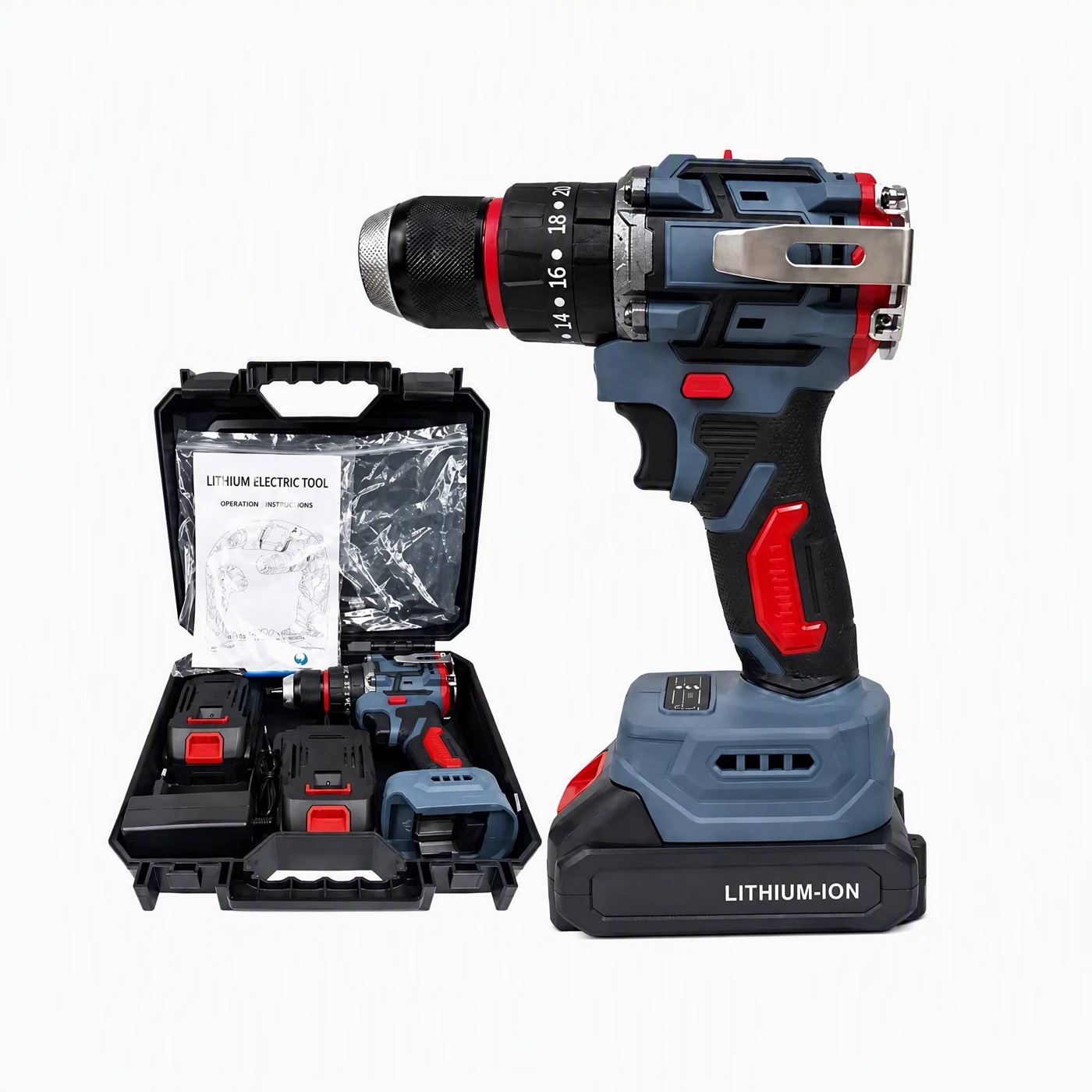
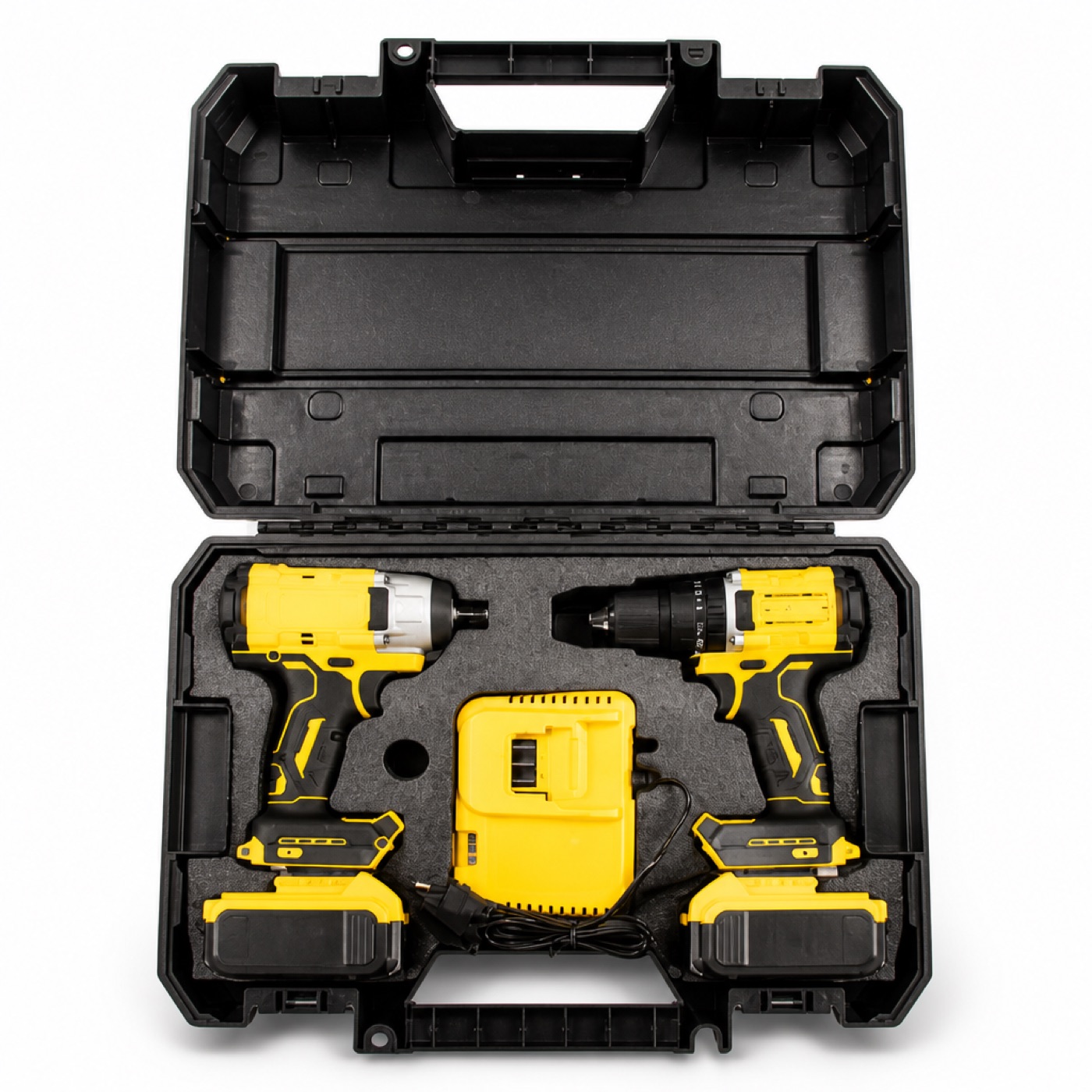
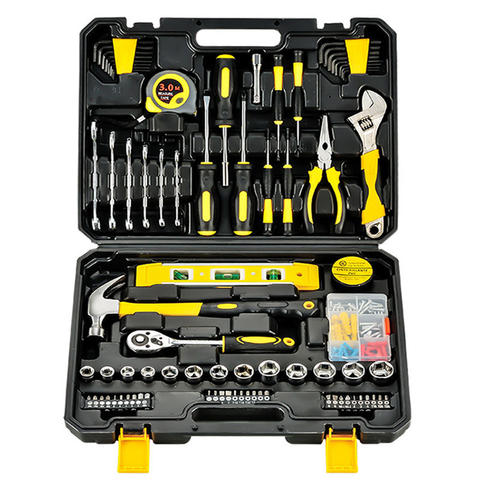
For a first order of power tools, one workable structure is a single hero SKU plus two support SKUs rather than six equally sized items. A cordless drill driver at a quoted US$13.50-16 per unit with a minimum of 10 bags, or a drill and impact wrench combo kit at US$28-30 per piece from one piece upward, gives you a price anchor and a premium step in the same shipment. A mechanic tool set at US$17-19.78 per set, minimum one set, fills the third slot without adding a second packaging design.
Step 1: shortlist suppliers on evidence, not on response speed
The fastest reply is usually the least useful. Shortlist three to five suppliers and score them on what they can show, not what they claim. Ask each one the same four questions and compare the answers side by side.
- Which models in your catalogue are produced in your own plant, and which are traded in? A supplier who is honest about the split is more useful than one who claims everything is in-house.
- Can you send the test report for the exact model you are quoting, not a similar one? The model number on the report must match the model number on the quotation.
- What is the lead time for this quantity, counted from deposit or from artwork approval? Those are two different dates and the gap is often two weeks.
- Who handles spare parts and warranty claims after shipment, and how are they shipped?
If a supplier cannot answer the second question, treat every other claim as unverified. A test report for a sister model is not evidence for the model you are buying.
Step 2: request quotes on one fixed specification sheet
Build a one-page specification sheet and send the identical file to every supplier. Ask them to quote against it and to mark any line they cannot meet, rather than silently substituting. The sheet should carry the model, voltage, chuck or blade size, no-load speed, battery capacity and cell type, motor type, housing material, accessory list, packaging format, carton quantity, and the Incoterm you want.
Require the quote to state validity, MOQ per SKU, price breaks at two higher quantities, FOB port, lead time, and what is excluded. A price without these is a number, not an offer.
If two quotes differ by more than fifteen percent on the same specification sheet, the difference is almost never the supplier's margin. It is a specification that was quietly changed.
Step 3: sample first, then pre-production approval
Order a sample from the shortlisted supplier and test it against your own sheet, not against the supplier's brochure. Record the serial or model number of the sample you approved and attach photos of the exact unit, including the label and the packaging. That record becomes the reference for the production run.
- Run the tool continuously for a short duty cycle and check housing temperature and switch feel.
- Check that the battery, charger and plug match the destination market, not the domestic version.
- Confirm the label carries the model, voltage, rating and the importer details your market requires.
- Photograph the carton, the inner packing and the accessory bag, because these are what production will copy.
- Keep one approved sample sealed and stored; it is the only reliable answer to a later dispute.
Step 4: payment structure, inspection and documents
A deposit and balance against a copy of the bill of lading is the common structure, and it is reasonable when the supplier is verified. What matters is tying the balance to something you can inspect. Book a third-party inspection before the balance is released, and write the inspection standard into the order confirmation so it is not a surprise.
Before the container leaves, collect the commercial invoice, packing list, bill of lading, certificate of origin if your market qualifies for preferential duty, and the product test reports for the exact models shipped. For cordless tools, the battery transport documents are a separate set and should be requested weeks in advance, not days.
A realistic timeline for a first order
From first email to goods on the water, plan for six to ten weeks: one to two weeks to shortlist, quote and compare; one to two weeks for samples and approval; two to three weeks for production once artwork and deposit are confirmed; and about a week for inspection, booking and loading. Buyers who compress this into a month usually do it by skipping the sample approval, which is the step that protects them.
The first order is a test of a working relationship, not a test of how cheaply you can buy. Choose the supplier whose answers stayed consistent when you asked the awkward questions, and keep the specification sheet in the same format for the second order. The second order is where the cost of a rushed first one shows up.