Searching for a power tool supplier in China returns thousands of results, and nearly all of them describe themselves in identical language: factory-direct, OEM/ODM welcome, competitive price, fast delivery. The useful question is therefore not how to find a supplier. It is how to tell, before you transfer a deposit, which of them can hold a delivery date and a quality level across repeat orders.
This guide sets out the sequence experienced importers use, and the specific checks that separate a manufacturing operation from a trading office.
Start by defining what you are buying
Most first-order problems trace back to a vague brief. Before contacting anyone, write down five things: the tool type and its key specification, the market you are selling into, the certification that market requires, your target landed cost, and the order quantity for the first and the second order.
- Specification: for a cordless drill that means voltage, chuck size, maximum torque, speed range and battery platform, not simply a 21V drill.
- Market: the EU, US, Middle East and Africa each imply a different plug, voltage label and certification set.
- Certification: decide this before the quotation, because it changes the bill of materials and therefore the unit price.
- Quantity: give the first order and a realistic annual volume separately. Suppliers price each one differently.
- Packaging: retail box, colour box or plain carton changes cost and lead time more than most buyers expect.
The five checks to run before paying a deposit
These are the checks that most consistently predict whether a supplier will perform on the second and third order, which is where the relationship is actually built.
- Legal identity: get the full registered company name and cross-check it against the bank account name on the proforma invoice. A mismatch between the two is the single most common fraud signal.
- Business scope: confirm the registered scope actually covers manufacture of your product category, not merely import and export.
- Production evidence: ask for a short video call walking through the line that will run your order. Still photographs are easy to borrow from elsewhere.
- Technical documentation: request the datasheet for the exact model being quoted, not a catalogue page. Suppliers who build the tool hold the data; resellers frequently do not.
- Market history: ask which export markets this model already ships to. The answer tells you which certification set the tool was genuinely built against.
Questions that reveal how a supplier operates
The wording of an answer matters more than its content. A supplier that manufactures will talk about tooling, moulds, incoming inspection and carton dimensions. A supplier that resells will talk about their factory and good quality, without numbers attached.
A supplier that cannot tell you the carton dimensions and the number of units per carton is not the party who is packing your goods.
Three questions are especially productive. Who owns the mould for this housing? What is the incoming inspection step for the motor and the battery cells? And what happens to a finished unit that fails the final function test? Vague answers to all three are a clear signal that your order will be subcontracted.
Reading the quotation properly
Compare quotations line by line rather than total against total. Two quotes for the same tool at different prices are usually not the same product.
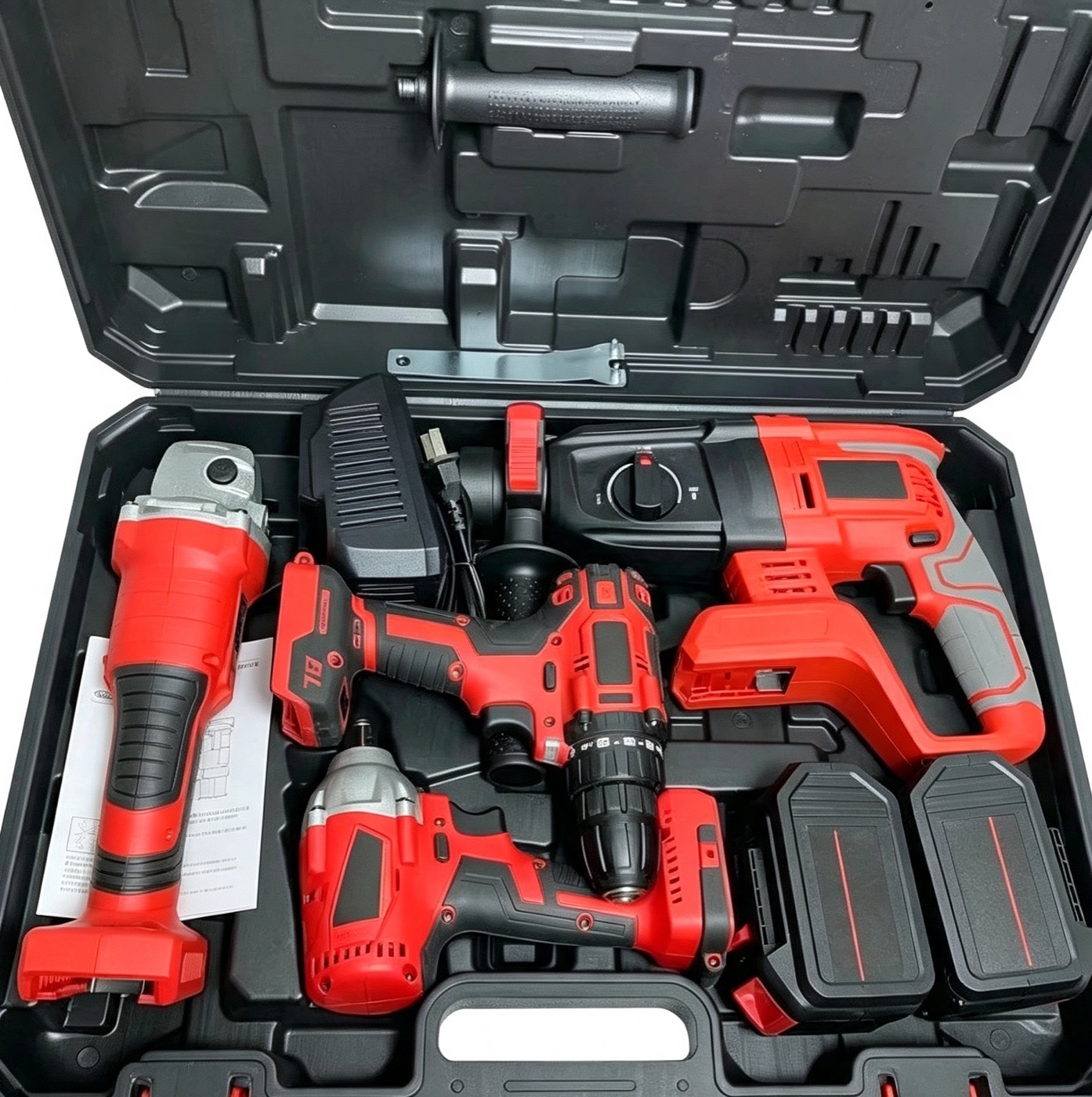
- Confirm what is included: battery, charger, carry case, accessories and manual are all optional line items.
- Confirm the trade term, because FOB, CIF and DDP produce very different numbers from the same factory.
- Confirm the MOQ basis: per model, per colour or per carton.
- Confirm validity, since a quotation with no validity date is not a commitment.
- Confirm what the lead time is measured from: deposit, artwork approval or material arrival. These can differ by several weeks.
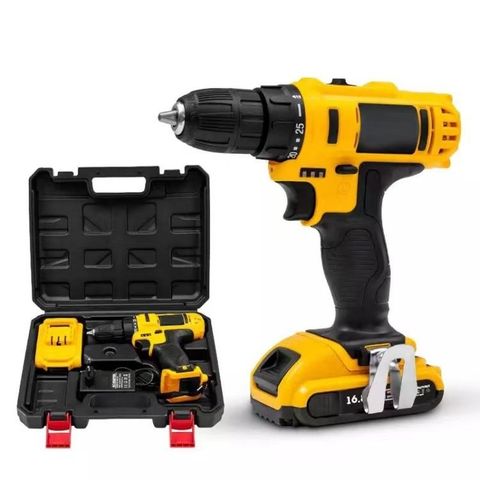
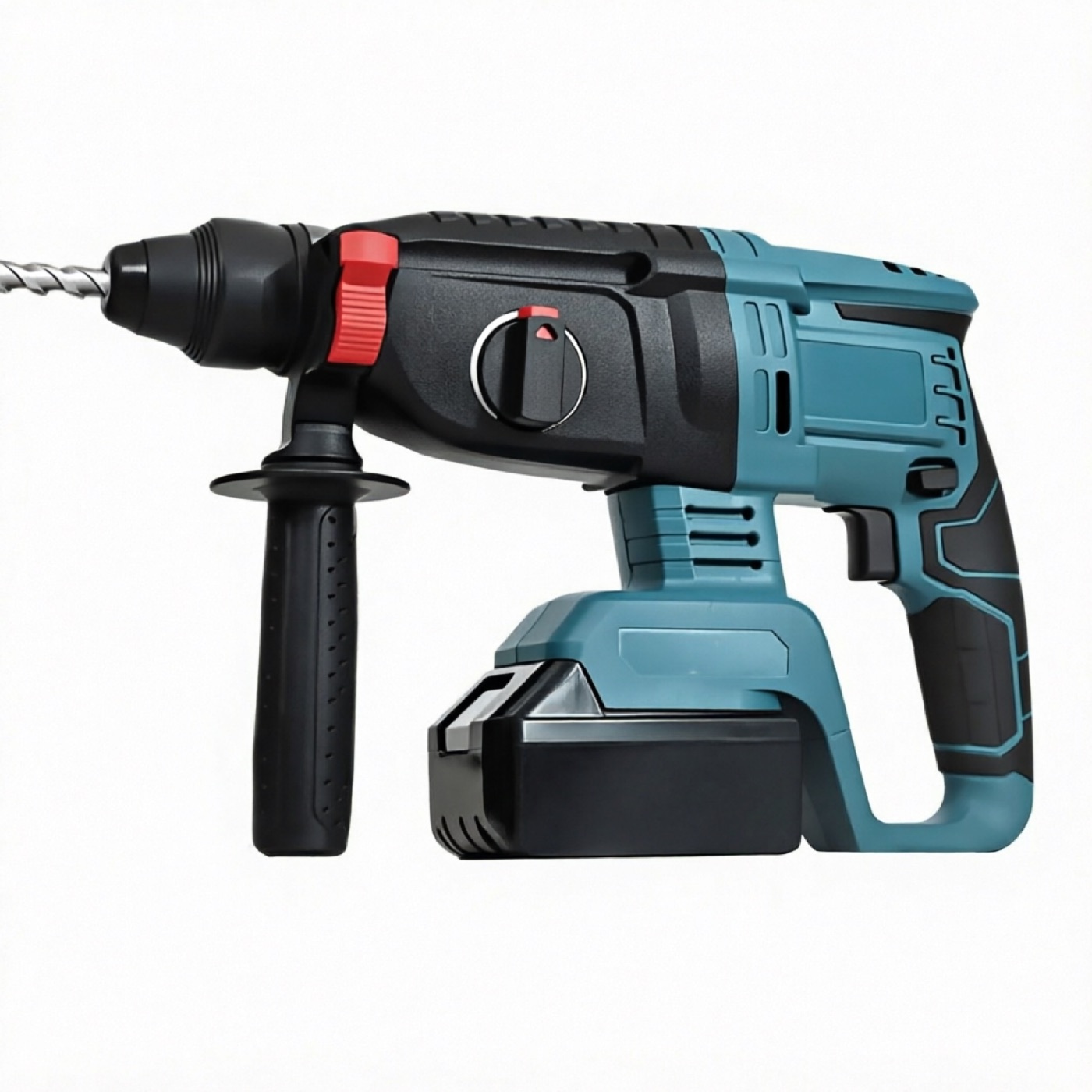
For scale, catalogue ranges at the time of writing run from US$13.50-16 for a 21V cordless drill driver with a 3/8 in chuck and 1800 RPM, through US$16-20 for a brushless lithium-ion drill driver, up to US$24-26.51 for a cordless 36V brushless rotary hammer with an SDS Plus chuck. Minimum order quantities on these models sit between one and ten units, which is low enough to order a sample set across a range before committing to volume.
Running a first order without betting the business
Treat the first order as a test of the process rather than a test of the price. Process problems are recoverable; a large badly specified order is not.
- Order two or three models rather than a single unit, because one unit tells you nothing about consistency.
- Agree the pre-shipment inspection report format before ordering, so both sides know what will be measured.
- Start with a quantity you could afford to write off, then scale on the second order once the process has held.
- Put the warranty term and the spare-parts arrangement in the same document as the price.
- Keep the carton and shipping mark specification in writing, and reference it in the purchase order.
What to do next
A supplier relationship is built on repeat orders, not on a first quotation. Run the five checks, ask the three questions about tooling and inspection, and place a sample order you can evaluate against a written specification. Suppliers who survive that process are the ones worth a long-term agreement, and they are usually not the ones quoting the lowest first price.