A cordless tool line is not a list of tools. It is a battery platform with tools attached to it, and the platform is what the customer actually buys into. That single fact explains most of the range decisions that go wrong: a distributor builds a catalogue by picking the best-value model in each category, and ends up with four incompatible platforms, four charger types and four sets of spares.
The opposite failure is just as expensive. A distributor commits to one platform and then cannot serve the half of the market that has already standardised on a different one. Choosing the number of platforms is the central commercial decision in a cordless line, and it deserves more thought than the model selection that follows it.
What the voltage number actually tells you
The number on the side of a battery is a marketing figure, not an electrical one. A pack sold as 21V typically uses five lithium cells in series, whose nominal voltage is 18V and whose fully charged voltage is close to 21V. A pack sold as 12V is usually three cells, nominal 10.8V. This is not deception so much as convention, but it means two tools sold at different voltages may sit on the same cell platform, and two tools sold at the same voltage may not be interchangeable at all.
The practical consequence: never assume compatibility from the label. Compatibility is a physical question about the slide mount, the terminal layout and the communication between pack and tool, and the only reliable answer is a confirmation from the supplier that the packs and chargers are interchangeable across the specific model list you intend to carry.
A battery platform is a lock-in device. Choose how many locks you want your customers to own before you choose the tools.
One platform, two platforms, or a segmented range
The right number of platforms is a function of how many distinct customer segments the distributor serves, not of how many models are available. Three common structures work, and each has a clear cost.
- Single platform: one voltage family covering everything from a drill to a garden tool. Lowest inventory complexity, strongest aftermarket, but it forces light users to buy more tool than they need and heavy users to accept less than they want.
- Two platforms: a compact low-voltage line for light trade and household, and a high-voltage line for heavy trade. This is the most common distributor structure because it matches how buyers actually buy, and it doubles the battery and charger inventory.
- Segmented by channel: one platform for retail, another for the professional trade counter. It protects price architecture but requires separate packaging, separate catalogues and separate sales stories.
Each additional platform adds a battery SKU set, a charger SKU set, a spare-parts commitment and a training burden for the sales team. A distributor carrying three platforms is effectively running three small businesses. That can be the right answer for a large operation and the wrong one for a first cordless range.
Reading the catalogue by price band
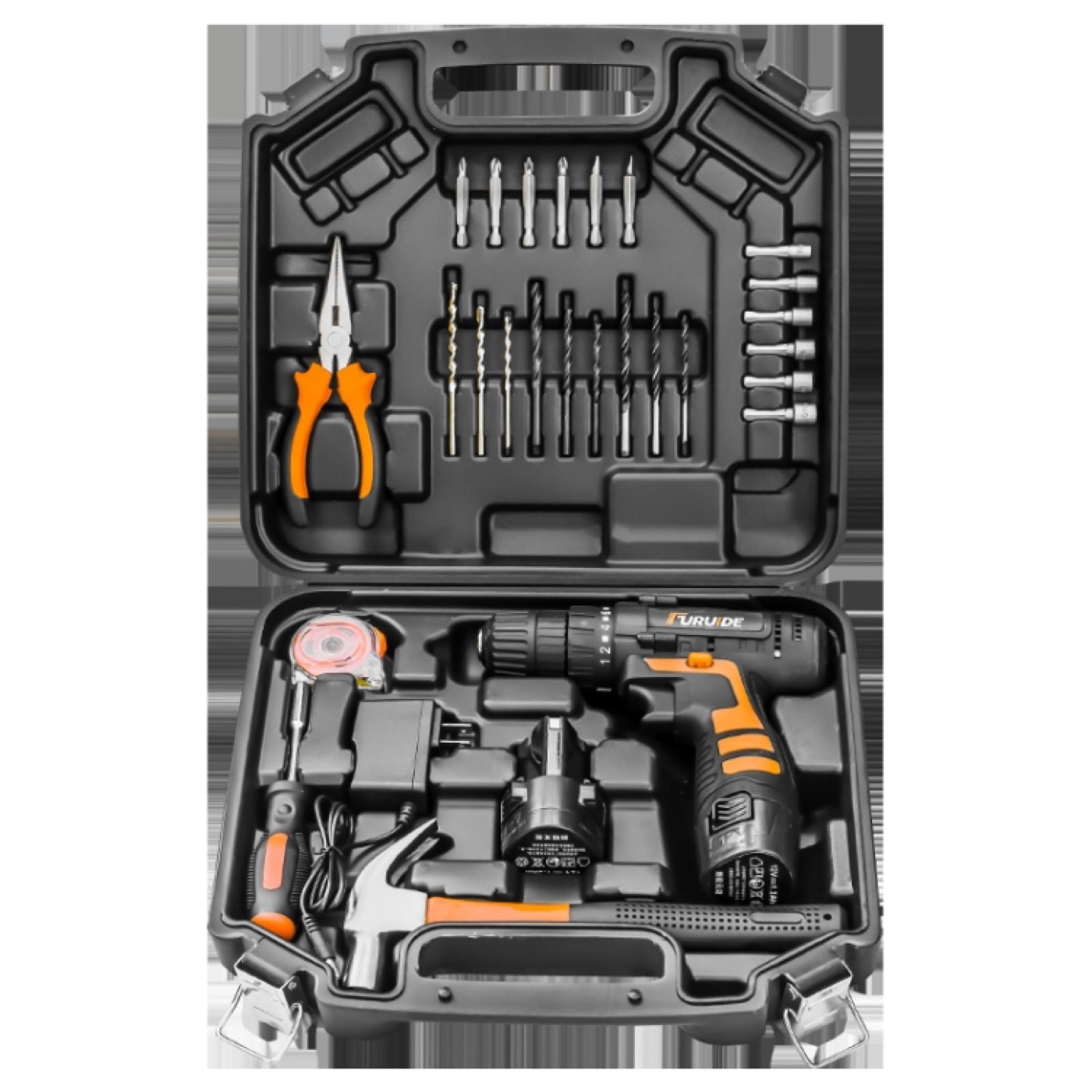
The range in this catalogue shows how voltage and price band line up in practice. A 12V industrial mini impact drill set with a rechargeable battery sits at US$13-18 with a minimum of 100 sets, which places it firmly in the volume retail channel. A 21V cordless drill driver with a 45Nm rating sits at US$13.50-16 from 10 bags, overlapping the 12V set on price but not on use case.
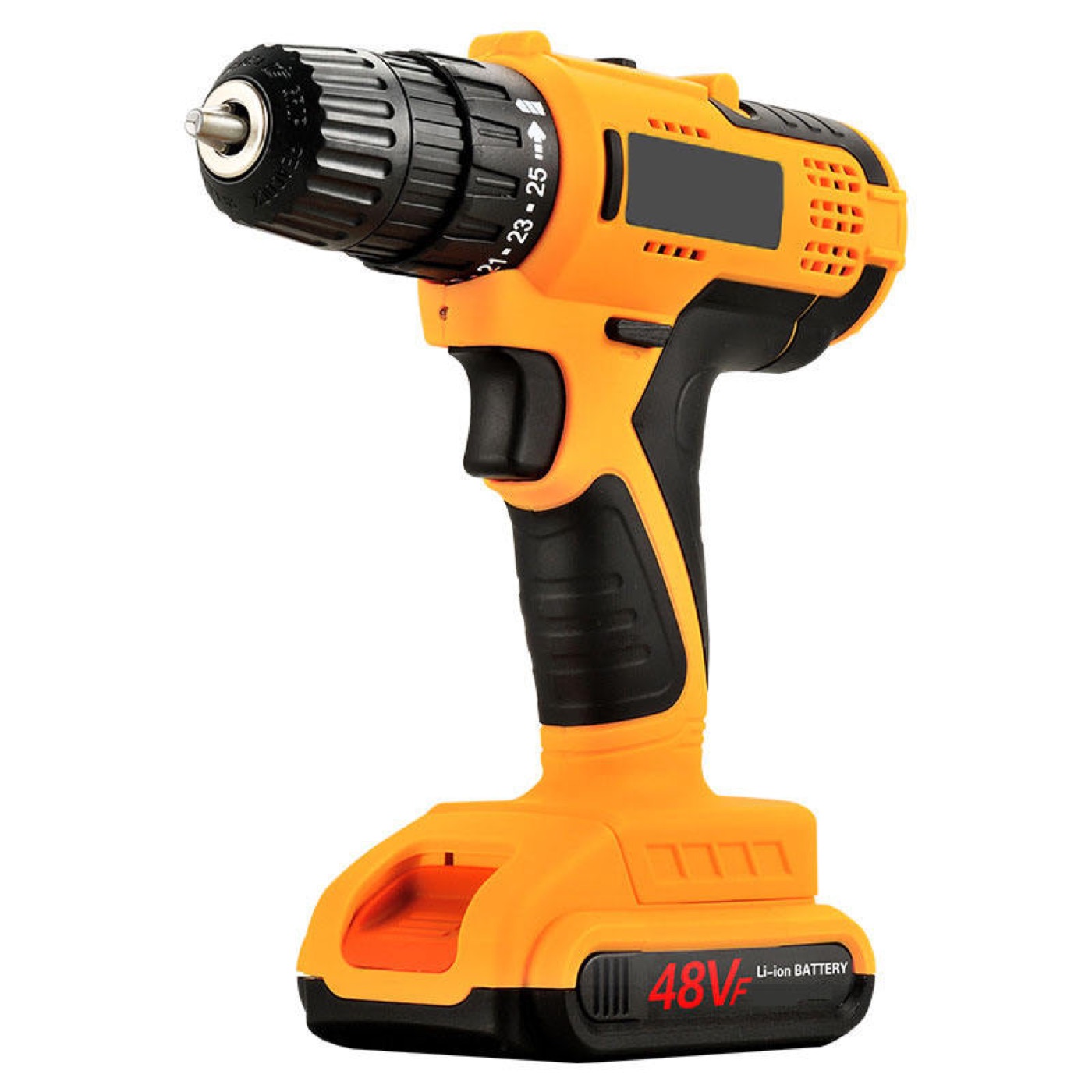
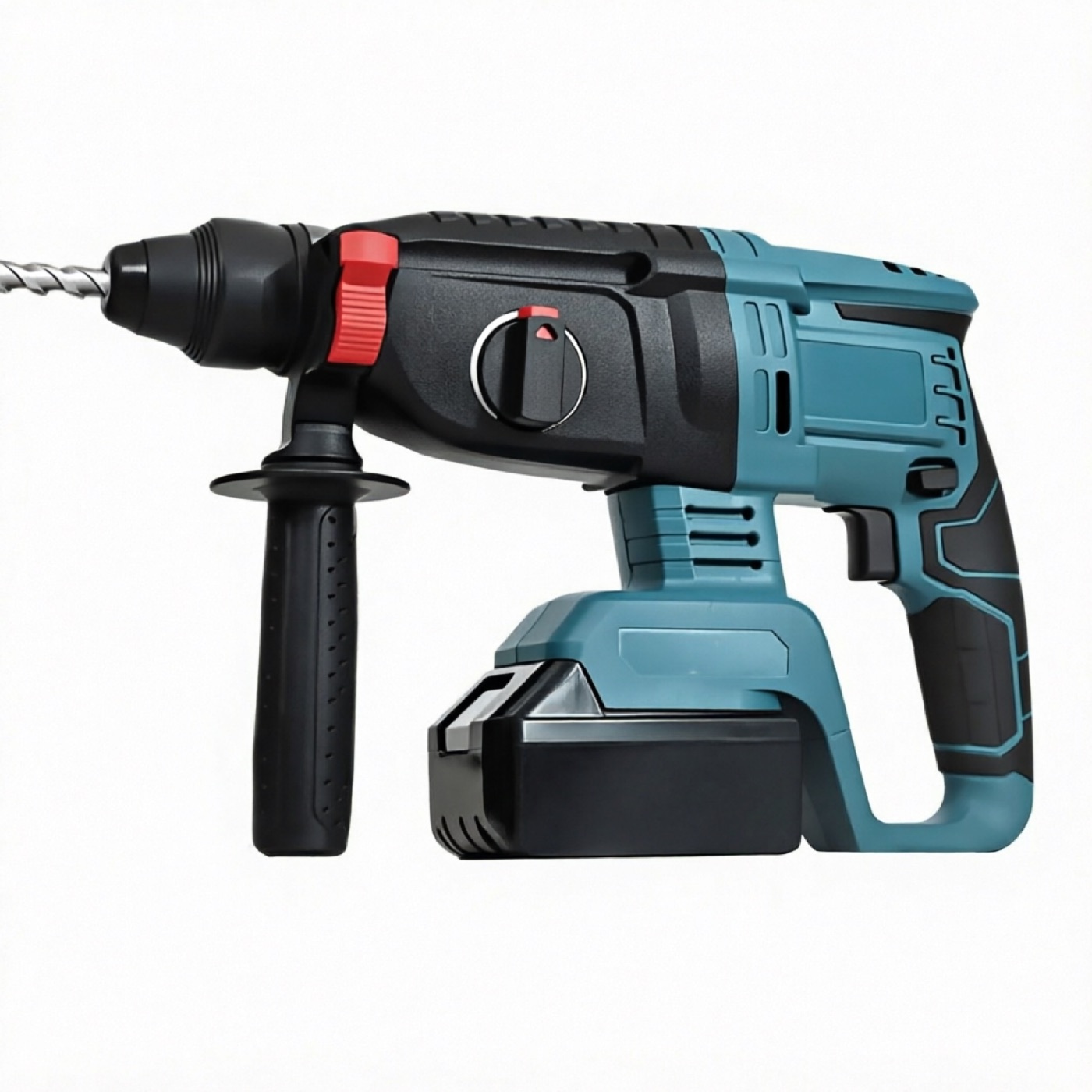
Further up, a 48V handheld drill with a rechargeable battery sits at US$20-21.90 from a single set, and a 36V brushless rotary hammer with an SDS Plus chuck sits at US$24-26.51 from two pieces. The 36V and 48V models are not simply more powerful versions of the 21V drill. They serve buyers drilling into concrete and masonry, where the chuck type and the impact mechanism matter more than the voltage claim.
The pattern worth noticing is the overlap. A 12V set at US$13-18 and a 21V drill at US$13.50-16 compete for the same shelf, and a distributor who carries both without a clear story ends up cannibalising one with the other. The story is the use case: household and light assembly for the 12V, sustained drilling and driving for the 21V.
The aftermarket arithmetic
Cordless economics are decided after the first sale. A tool sold once generates one margin; a battery sold twice more generates two. That is why platform depth matters more than model breadth: every additional tool on the same platform increases the chance that the next battery purchase goes through the distributor who sold the tool.
Three aftermarket items decide whether that works. Spare batteries, in the capacity the market actually uses rather than the largest one available. Chargers, including a fast charger, because charge time is the most common complaint after runtime. And consumables or accessories that fit the platform's tools, which is where the highest-margin repeat purchase usually sits.
What to confirm with the supplier
- The exact model list that shares one pack and one charger, confirmed model by model rather than by voltage family.
- Cell configuration and capacity in Ah, so that runtime claims can be compared across suppliers on a like-for-like basis.
- Charger input voltage range and the safety approvals the charger carries, which are separate from the tool's own approvals.
- Minimum order quantity per battery and per charger, because these often differ from the tool's MOQ and can dominate the first order.
- Whether packs ship inside the tool or separately, and the resulting transport documentation.
- Spare-parts and pack availability period after the order, in writing.
The MOQ point catches distributors repeatedly. A tool quoted at a low minimum may carry a battery minimum several times higher, and the true entry cost of the platform only becomes visible when both numbers are on the same page.
A sequence that limits the downside
Start with one platform and enough breadth to cover the three highest-rotation jobs in the market. Add a second platform only when a specific customer segment cannot be served by the first, and add it with the smallest possible battery and charger range. Treat the third platform as a decision for the second year, not the first order.
Then measure the right thing. Not units sold, but the ratio of battery and charger sales to tool sales. A platform that sells tools without selling packs is a platform the customer is buying elsewhere, which means the lock-in never happened and the aftermarket margin is being earned by someone else.