The corded-versus-cordless question gets argued as a technical one: torque figures, runtime minutes, motor type. Those numbers matter to the end user, but they are not the numbers that decide whether a distributor makes money on a tool line. What decides it is whether the market can power the tool, whether the buyer can service it, and whether the same customer comes back for batteries and spare parts.
That reframing changes the answer. In some markets the cordless line is the growth line; in others it is a slow-moving shelf of unusable inventory. This guide sets out the questions to answer before committing capital to either, and the specific confirmations to extract from a supplier before the first order.
Start with the jobsite, not with the catalogue
A tool line either matches how buyers in that market actually work, or it sits in the warehouse. Four facts about the buyer determine the match, and all four can be established before a single sample is ordered.
- Power reliability: whether the buyer's sites have stable mains supply. On sites with generator power or frequent outages, a battery tool is not a convenience, it is the only workable option.
- Distance from the vehicle: tools used within reach of a van or a workshop socket can stay corded. Tools carried up scaffolding, into a trench, or across a field cannot.
- Existing battery ownership: a buyer who already owns one platform will not adopt a second one for a single tool. Which platform dominates locally is checkable at retail level before you choose a voltage.
- Service capability: cordless tools fail at the battery and the switch first, and both need a supply of spares. A market without that supply turns every failure into a warranty dispute.
A distributor who answers these four questions honestly usually finds that the market wants both lines, but not in the same proportion, and not with the same depth of range. The mistake is stocking a full cordless range into a market that only needs two or three high-rotation models.
Where corded tools still win
High-draw, continuous work remains corded territory: concrete cutting, sustained grinding, core drilling and long runs of heavy sanding. A battery pack sized to deliver that duty cycle becomes large, heavy and expensive, and the user ends up carrying the cost of a capability they only need occasionally.
Corded tools also carry a lower unit price at equivalent output, which makes them easier to place in price-sensitive retail. The trade-off is that they generate almost no aftermarket: no batteries, no chargers, fewer high-margin consumables. A corded line is a product sale. A cordless line is a customer relationship.
A corded tool is the cheapest thing to sell and the hardest thing to sell twice. A cordless tool is the opposite.
Where the battery line earns its margin
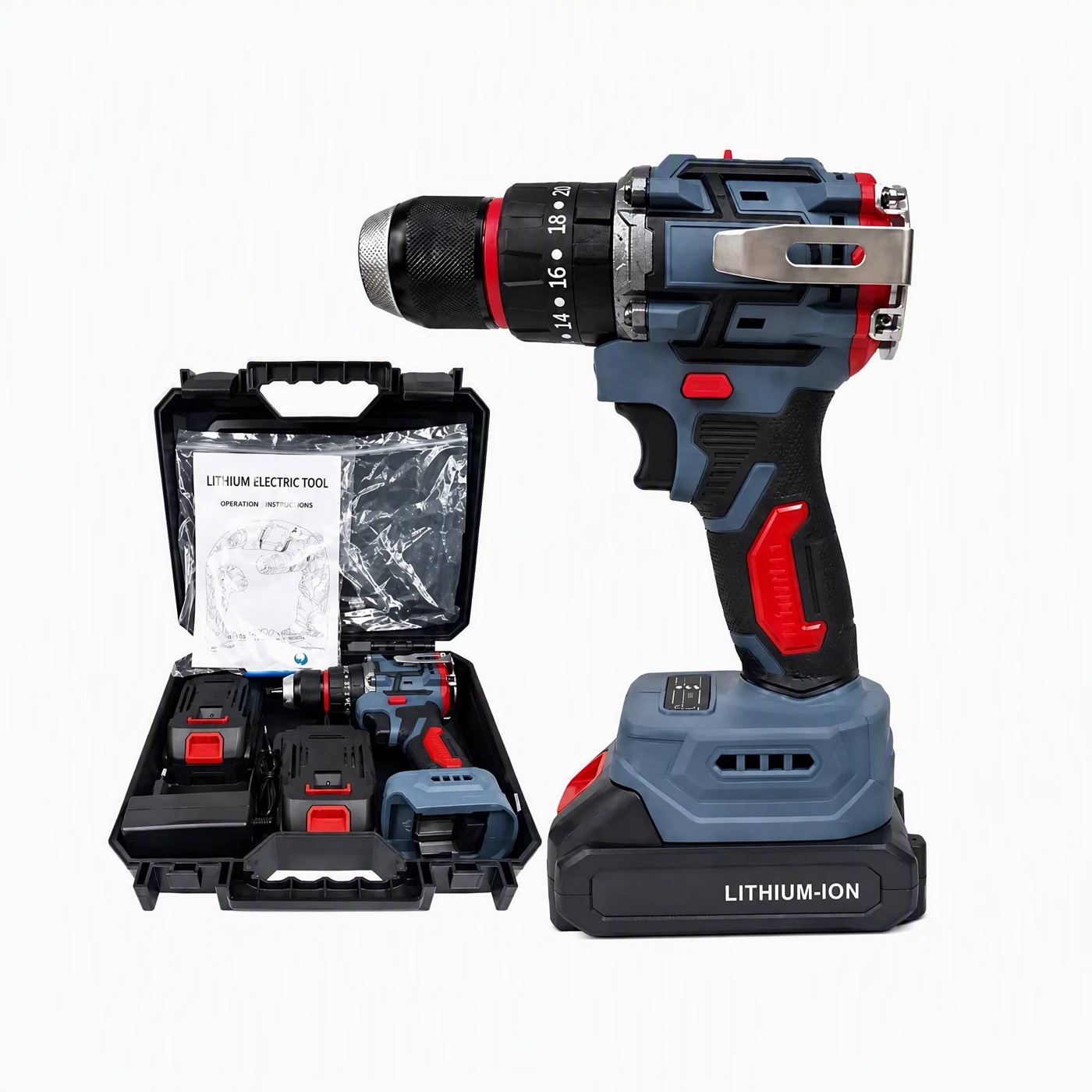
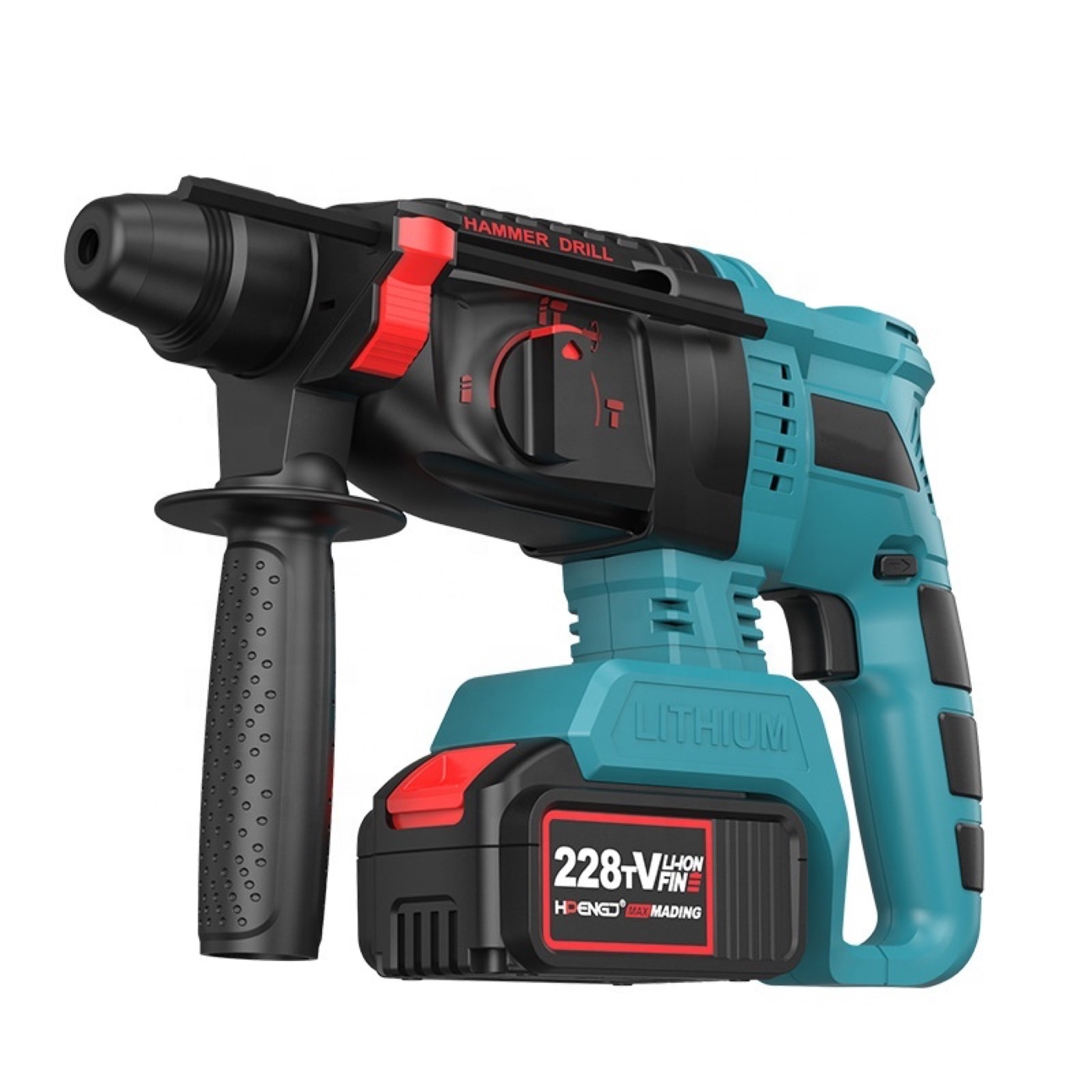
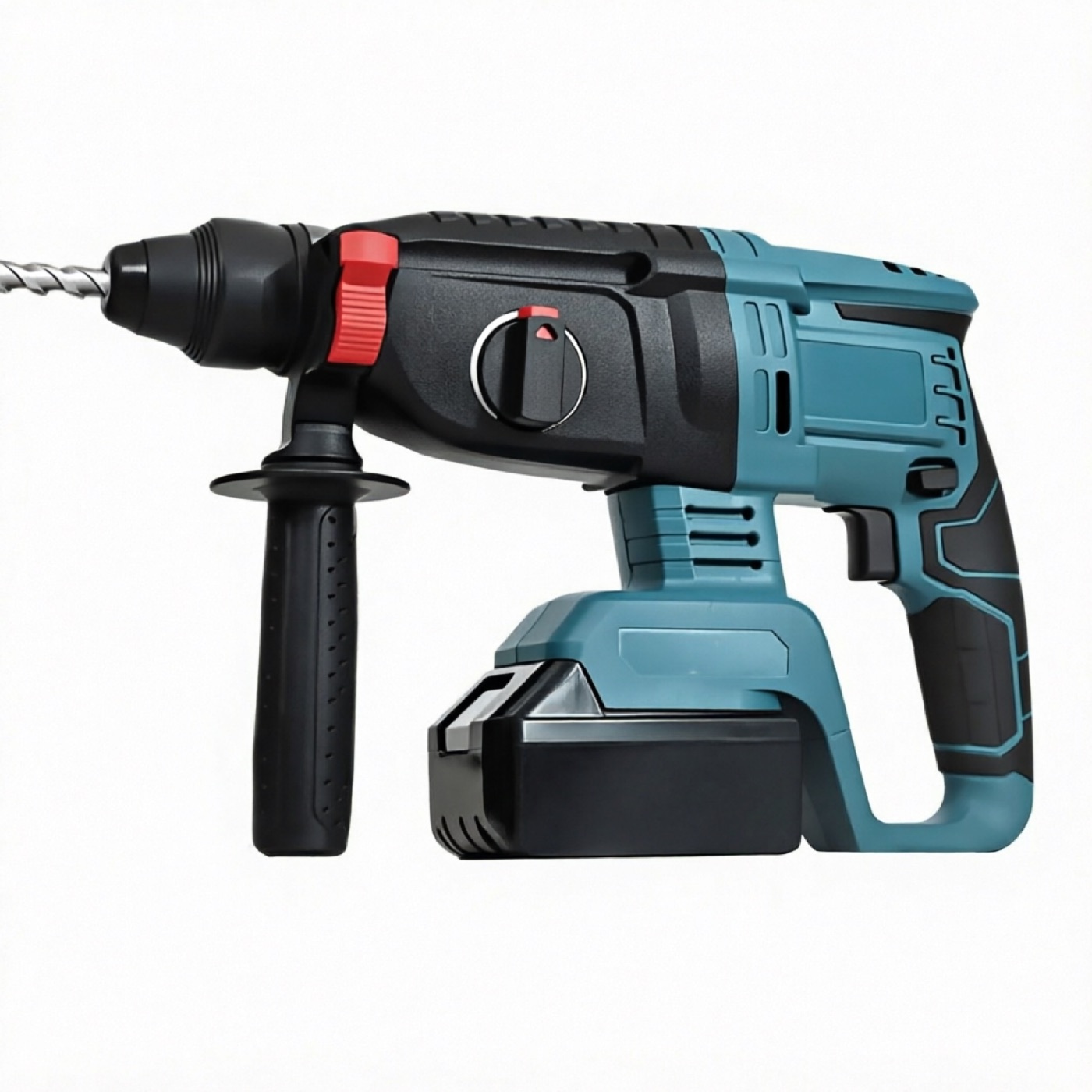
The cordless range in this catalogue shows how wide the price spread is within one category. A 21V cordless drill driver with a 45Nm rating and a 3/8 inch chuck sits at US$13.50-16 with a minimum of 10 bags. A 36V brushless rotary hammer with an SDS Plus chuck sits at US$24-26.51 from 2 pieces. A rotary impact cordless hammer drill for concrete and wood sits at US$35-42 from one set.
Three models, three price bands, and three different buyers. The US$13.50-16 drill is a volume retail item that competes on shelf price. The US$24-26.51 rotary hammer is a trade-counter item bought by someone who already knows what an SDS chuck is. The US$35-42 hammer drill is specified by the job rather than by the price tag. A distributor who buys all three at the same depth will overstock two of them.
The margin in cordless does not come from the tool. It comes from the second battery, the fast charger, the spare and the consumable. That is why platform decisions matter more than model decisions: every additional model on the same battery platform strengthens the whole line, and every additional platform fragments it.
What to confirm before committing to a line
The specification sheet answers fewer questions than buyers expect. Five items need to be confirmed in writing, separately, because each one becomes a dispute if it is left to assumption.
- Voltage and plug configuration for the destination market, stated per SKU rather than per product family.
- Battery cell type and capacity, with the nominal voltage defined by the cell configuration rather than by the marketing number on the label.
- Charger input range and the safety approvals the charger itself carries, which are separate from the tool.
- Spare-parts availability: which components can be supplied separately, at what minimum quantity, and for how long after the order.
- Packaging: whether the tool ships in a colour box, a blow-moulded case or a plain carton, and whether the battery ships inside the tool or separately, which changes the transport classification.
The packaging point is the one most often missed. A battery shipped inside a tool is classified and documented differently from a battery shipped alongside it, and that difference shows up at the port rather than at the quotation stage.
A decision rule that survives the first season
A workable rule of thumb: stock the cordless line at the depth the local platform can support, and stock corded tools only where the job genuinely cannot be done on battery. In practice that means a narrow cordless range with full battery and charger coverage, plus a small corded range for the heavy continuous jobs.
Then test the assumption rather than the catalogue. Order a small quantity of one cordless model and one corded model, place them with two or three real customers, and watch which one generates the follow-up conversation about batteries, chargers and spares. That conversation, not the sell-through number, tells you which line to deepen next season.
The worst outcome is not choosing the wrong line. It is choosing both lines at full depth in the first order, and discovering in month four that the capital is sitting in the wrong boxes.