Private label is often quoted as a single service, which is why the first quotation is frequently the cheapest and the final invoice is not. In reality it is four separate decisions, and each one carries its own minimum run, its own lead time and its own compliance consequences.
Understanding the four separately is what lets a brand owner sequence a launch sensibly instead of paying for all of it at once.
The four levels of branding
- Level one, the tool itself: a logo applied to the housing, usually by pad printing or a moulded insert. The cheapest level, and the one with the fewest complications.
- Level two, colour: a custom housing colour, which is a moulding decision and therefore carries a setup cost and a minimum run.
- Level three, packaging: a printed colour box or a branded carry case, which introduces printing plates, a minimum print run and artwork approval as a lead-time step.
- Level four, the retail layer: the rating label, the manual, the barcode and the importer identification, which are compliance items rather than marketing ones.
The cost and lead time of each level are unrelated to the others. A buyer who wants a logo, a custom colour and a full colour box is buying three separate minimums with three separate lead times, and the packaging will almost always take longest.
Artwork: what to prepare as the brand owner
Artwork delays are the most common cause of a private label launch slipping, and they are entirely within the buyer's control.
- Logo in vector format, so it can be scaled to a small housing pad print without losing definition.
- Colour references specified by a standard colour system, not by a screenshot, because screens and print output do not match.
- The exact wording of every text element on the box, including the feature list and any translated copy.
- Barcode data and placement for each market, since the required position varies by retailer.
- The legal identity and address that must appear as importer on the label, which is a compliance requirement rather than a branding choice.
Where branding and compliance collide
The rating label is the point where a marketing decision becomes a legal one, and it is the element most often overlooked in a new private label range.
The rating label is not packaging artwork. It is the document that makes the product legal to place on the market, and it must name the responsible party.
A private label tool places the importer obligations on you rather than on the factory. That means your name and address appear as the responsible entity, the model designation on the label must match the certification file, and any change to the housing or the electronics after testing invalidates that file. A late colour change is therefore not only a moulding cost; if it changes internal layout or thermal behaviour, it can reopen certification as well.
Sequencing a launch so the money lands where it matters
The efficient order of investment is almost always the reverse of the order buyers ask for.
- Start with the logo and the rating label, which are low cost, fast and necessary for the product to be sellable at all.
- Add branded packaging only once the model has proven it sells at the volume you assumed.
- Defer custom housing colour until volume justifies the moulding minimum, because it is the most expensive and least visible differentiator.
- Choose models already built as customisable platforms so the branding levels are genuinely available rather than negotiated case by case.
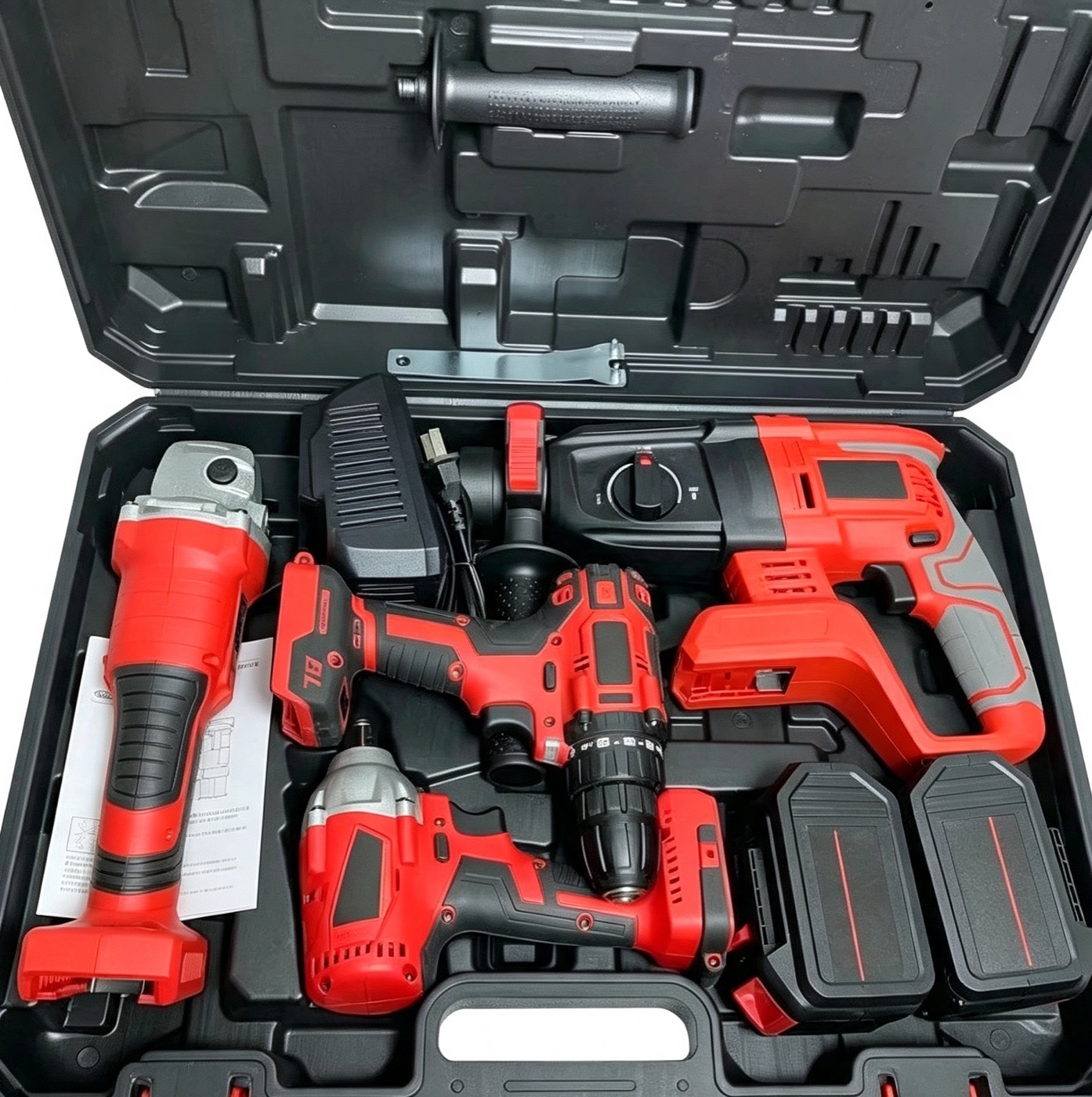
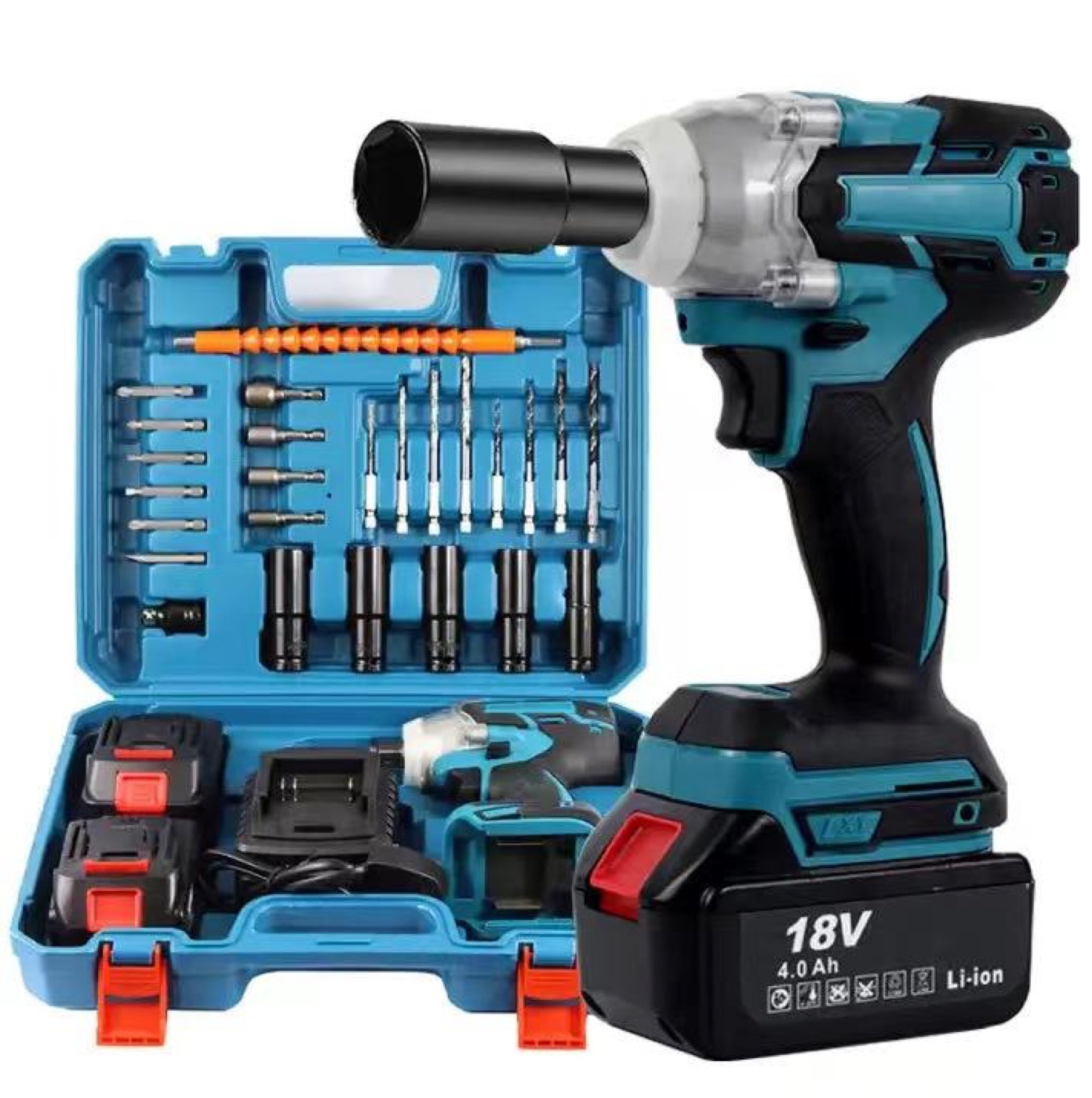
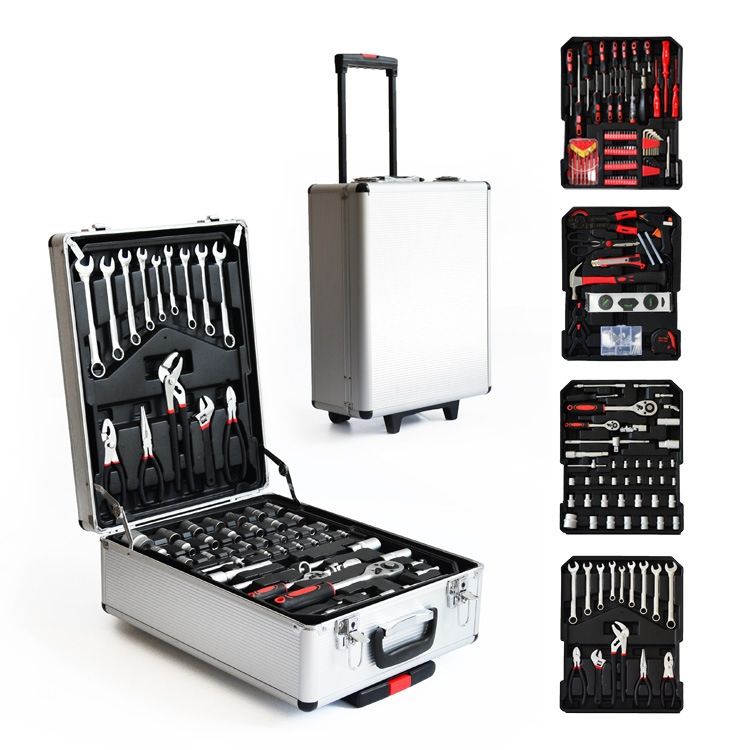
The practical starting point is a platform that is already designed for branding. A set such as the 4pcs in 1 21V brushless cordless power tool set, quoted at US$25-85 with a minimum of one set, covers several tool types under one brand identity, while a 499 piece combination tool set at US$40-50 with a minimum of one set gives a retail-ready presentation with minimal tooling exposure. Both are workable entry points precisely because they do not require a moulding commitment to carry your name.
Choosing the model to brand first
The first branded model sets expectations for the whole range, so it is worth choosing on more than unit price.
- Pick a model whose design is already certified for your target market, so branding does not reopen compliance work.
- Pick a model with a stable internal layout, because a housing still being revised will force your branding artwork to be revised with it.
- Pick a platform the factory already offers as customisable rather than one that would have to be adapted for you.
- Pick something a distributor can reorder predictably, since the second order is what actually proves a private label range.
- Pick a model that displays your logo well, because a mark that lands on a curved or cluttered surface is difficult to print cleanly.
The five things to agree in writing
Confirm which of the four branding levels the quoted price actually includes, since the unit price usually covers only one. Confirm who owns the mould if tooling is involved. Confirm the minimum run for the second order rather than only the first, because the second order is where a private label range either becomes viable or collapses. Confirm who pays for re-certification if a branding change affects the electronics or the thermal design. And confirm the approval process for artwork, including how many revisions are included, because unlimited revision rounds are not a thing at any price.