Tool orders are heavy and bulky at the same time, which makes freight the second-largest cost line after the goods themselves. It is also the line most often estimated from a catalogue photograph, because the buyer never asked for carton dimensions and the supplier never volunteered them.
Carton data is not a shipping detail to collect at the end. It determines whether a mixed order fits one container or two, and that single fact can outweigh any price concession you negotiate on the tools.
The data to request for every SKU
Ask for these four figures per model, per variant. Suppliers who manufacture hold them; suppliers who resell usually have to go and find out.
- Carton dimensions in centimetres, measured externally and consistently in the same order for every model.
- Units per carton, stated per variant, because a different battery configuration changes both the count and the carton size.
- Gross and net weight per carton, which are different numbers and are used for different purposes.
- Carton volume, or the three dimensions so you can calculate it, which is the figure container planning actually runs on.
For any cordless model, add the battery configuration to the request. A tool shipped with one battery, with two, or as a bare tool has three different carton weights and frequently three different carton volumes, so a quotation that does not state which configuration it assumes cannot be planned against.
How container capacity is actually estimated
Container capacity is a planning estimate, not a fixed number, because usable volume depends on how well the cartons tessellate and how the container is loaded.
- The nominal internal volume of a container is larger than the volume you can realistically load, because cartons do not fill the gaps between them.
- As a planning convention, a twenty-foot general purpose container is usually worked at roughly the high twenties in cubic metres, and a forty-foot high cube at roughly the high sixties.
- Weight limits can bind before volume does, which is common with tool orders because steel and dense assemblies make them heavy.
- Which limit binds first should be checked explicitly, since a volume-limited order and a weight-limited order need different packing decisions.
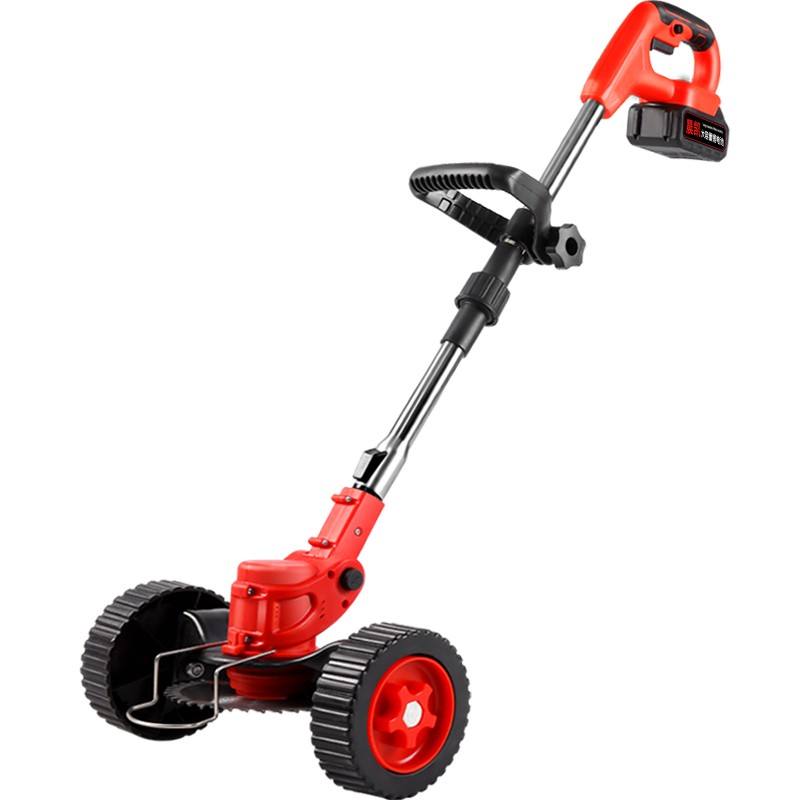
The practical consequence is that a mixed order of compact tools and bulky equipment behaves very differently from a single-model order. A 21V hand push lawn mower quoted at US$17-21 with an MOQ of five sets, for example, occupies volume out of proportion to its price, while a mini handheld grinder at US$9.50-10.50 with an MOQ of ten pieces packs densely. Loading both into one container is entirely workable, but only if the carton data for each is known in advance.
Floor loading against palletisation
The same cartons produce different loaded quantities depending on how they are handled at both ends.
- Floor loaded: cartons are stacked directly, which uses more of the available volume but requires labour at the destination to unload and sort.
- Palletised: faster and cheaper to handle at the destination, but each pallet consumes volume that is not carrying goods.
- Pallet footprints differ by market, and a pallet sized for one market may not suit another, so this should be decided before packing rather than on arrival.
- Stack height limits and compression strength matter on long sea routes, especially when cartons are stacked high in humid conditions.
Shipping marks and carton labelling
A carton that cannot be identified without opening it will be opened. Clear marks are what stop a shipment being picked apart at the destination.
Marks should be agreed as artwork, not described in text in an email. At minimum, each carton should carry the consignee reference, the purchase order number, the model and variant, the quantity per carton, the gross and net weight, the carton number within the total, the country of origin and any handling symbols that apply. Destination markets can add their own requirements, and these belong in the same artwork review.
Protection: the difference between a claim and a clean arrival
- Moisture control: sea freight crosses climate zones, and condensation is a common cause of surface corrosion on plated tools.
- Corner and edge protection: cartons stacked under load deform at the corners first, and the damage is transferred to the contents.
- Interior packing: moulded inserts protect better than loose fill, and the choice is usually visible in the unit price.
- Battery separation: cells and packs need physical protection against short circuit during transit, which is both a safety and a transport-compliance requirement.
Planning a mixed first container
First orders are almost always mixed, because the buyer is testing several models rather than committing to one. Mixed loads are where carton data earns its keep.
- Build a single loading sheet listing every model with its carton dimensions, units per carton and gross weight, then add the totals rather than estimating them.
- Load the heaviest and densest cartons first, because those are the hardest to reposition once the container is partly filled.
- Keep one model per carton rather than mixing models inside a carton, since mixed cartons break the receiving count at the destination.
- Reserve part of the volume rather than filling to the theoretical maximum, because the final cubic metres rarely load the way the plan assumes.
- Ask for a loading photograph before the doors close, which is the cheapest way to catch a packing problem while it can still be corrected.
What to settle before the order is placed
Ask for the carton data table before you finalise quantities, not after. Confirm the battery configuration each carton assumes, check whether weight or volume is your binding limit, decide floor loading against palletisation, and approve the shipping marks as artwork. Buyers who collect those four things up front usually discover that their order fits one container rather than two. Buyers who collect them at the port discover it the other way round.