No other product in a tool catalogue is sold so completely by a number. A buyer scanning a shelf sees 108 pieces against 499 pieces and immediately assumes one set is roughly five times the product. It is not. Piece count is a packaging decision as much as a product decision, and the gap between what the count promises and what the customer can actually use is where returns, complaints and dead stock come from.
For a distributor, the piece count has three separate jobs: it sells the unit at retail, it sets the landed cost through weight and case size, and it determines whether the customer comes back. Optimising for only the first is the standard mistake.
What a piece count is really counting
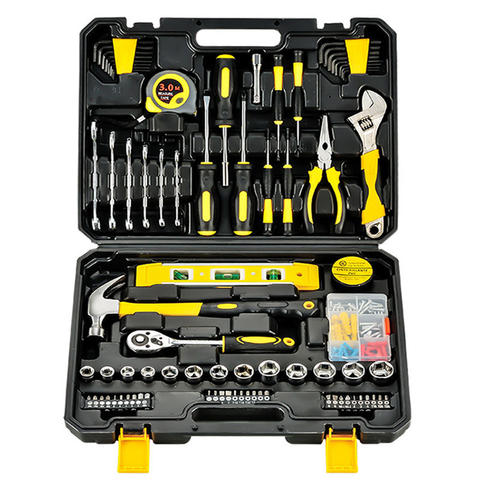
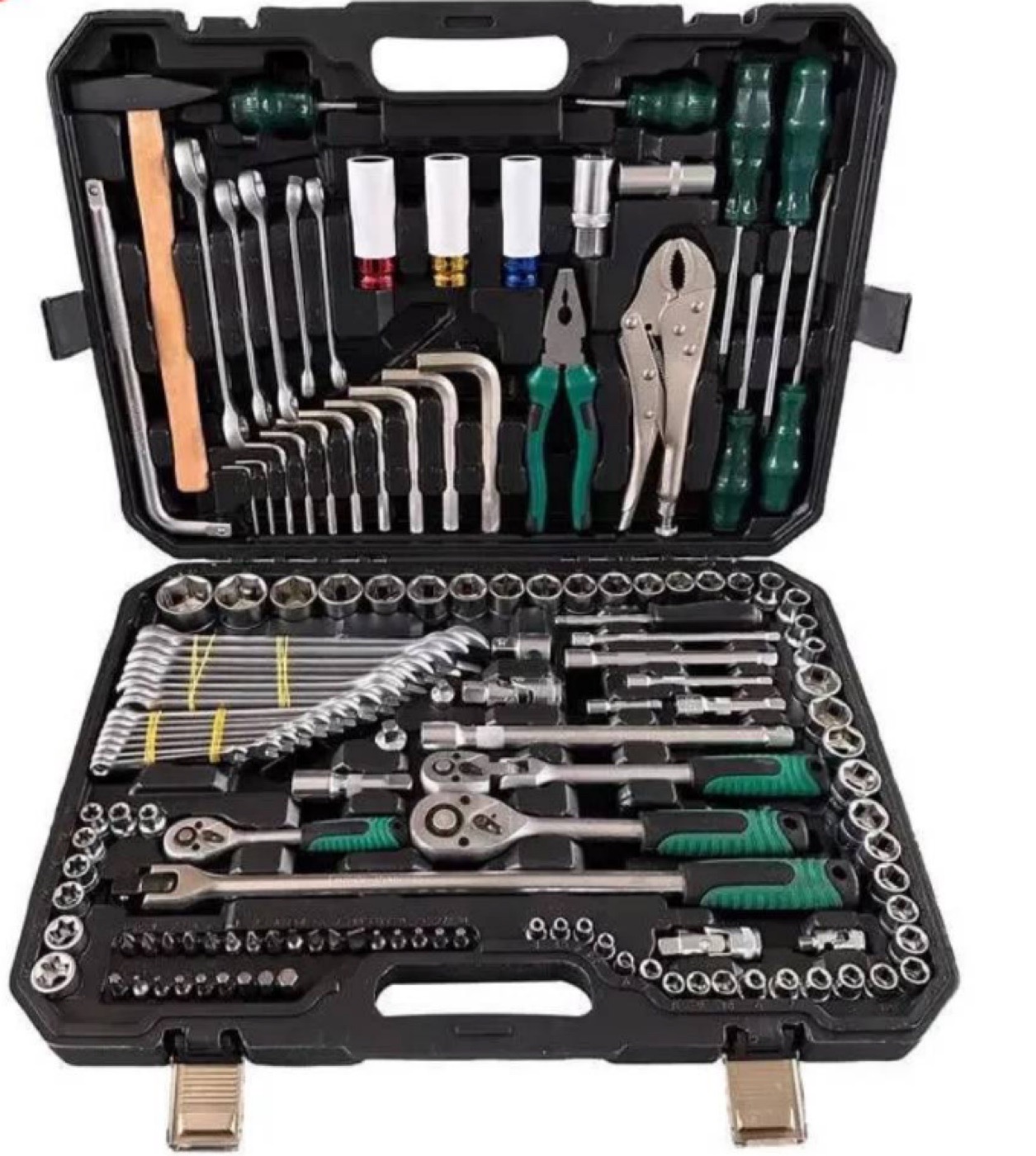
A 499-piece set is not 499 tools. It is sockets, bits, drivers, hex keys, adapters, a ratchet or two, and often a hammer, pliers and a tape measure, counted individually. A single screwdriver with interchangeable bits can contribute a dozen or more pieces to the total. The count is accurate in the sense that every item is physically in the case, but it is not a measure of capability.
The buyer's real question is whether the set covers the jobs they do. The useful way to evaluate a set is therefore to subtract the filler and see what remains: how many sockets, in what drive sizes, in what range; how many combination wrenches; whether the pliers are usable or decorative. A set that survives that subtraction is worth its shelf space. A set that does not will sell once and then generate complaints.
Piece count sells the first unit. What is left after you subtract the filler decides whether there is a second order.
Reading three real sets by price and MOQ
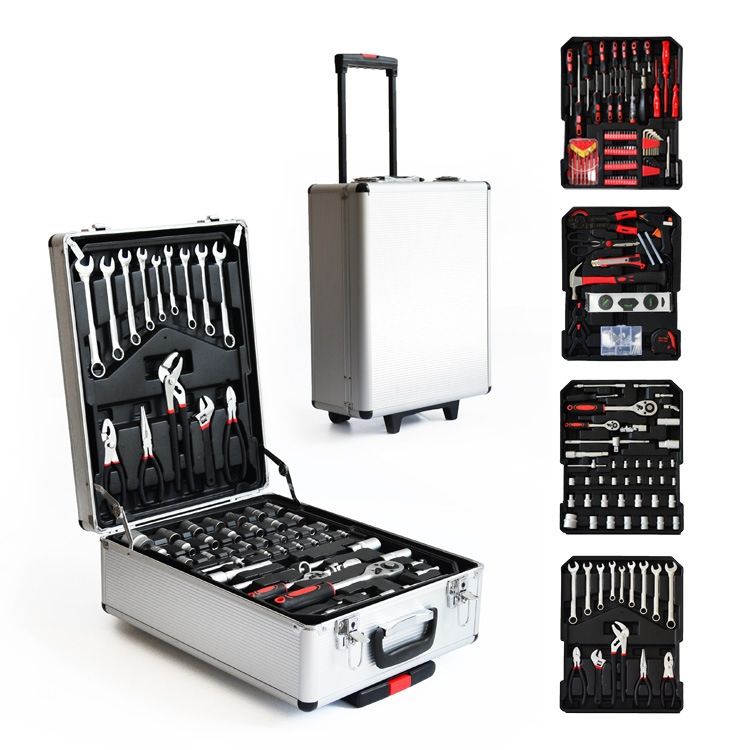
This catalogue carries sets across the whole band. A 108-piece mechanic tool set for car repair sits at US$17-19.78 from one set. A 499-piece combination tool set with ratchet, socket set and open-ended wrenches sits at US$40-50, also from one set. A 499-piece combination car repair set in a trolley case sits at US$58-68 but carries a minimum of 50 sets.
Those three numbers tell a story about how sets are costed. The 108-piece and the 499-piece flat set are both available from a single unit, which makes them viable for a distributor testing the market. The trolley version costs roughly 45% more than the flat 499 at the bottom of its range, and the difference is not the tools inside. It is the case, and the freight and handling that the case implies.
A household tool set for woodworking and electricians sits at US$18-30 with a minimum of 50 sets, which places it in a different channel again: a wider price range to accommodate configuration differences, and a minimum that assumes a committed programme rather than a trial order.
The weight arithmetic nobody quotes
A 499-piece set in a blow-moulded case weighs several times what the individual tools weigh, because the case exists to hold them in place and to survive being dropped. That weight is paid for twice: once in the freight, and again in the packaging that has to protect the case in transit. On a container shipment the effect is large enough to change the answer on which set to stock.
The practical comparison is not price per set but landed cost per usable tool. That number includes the case, the carton, the pallet configuration and the volume the set consumes in a container. A cheaper set in a bulky case can be the more expensive purchase per unit of shelf value.
- Ask for the gross weight and carton dimensions, not the product weight, because the difference is the case.
- Ask how many sets fit a pallet and a container, since this is what converts a unit price into a landed cost.
- Check whether the case is blow-moulded, injection-moulded or a fabric roll, because each survives transport differently.
- Confirm whether the case is included in the quoted price or treated as a separate packaging line item.
Planning the count for the channel
The right count depends on where the set is sold. A retail shelf competing on headline price wants a high count at a low price point, and the filler is doing legitimate work there: it makes the box look like value. A trade counter wants fewer, better items, and a lower count sells better because the buyer can see that nothing in the case is decorative.
Online sales invert the logic again. The photograph shows the layout of the case, and the review section will name every filler item within weeks. A set planned for e-commerce should be planned from the photograph backwards: the layout has to look complete and honest at the same time, which usually means a moderate count with better components.
A workable approach is to plan two counts on one platform: a retail count at the entry price, and a trade count with the filler removed and the sockets upgraded. The tooling and the case design can often be shared, which keeps the cost of carrying both lower than carrying two unrelated sets.
What to confirm before ordering a set
- An itemised breakdown of the count, so the filler can be identified before it reaches a customer.
- Drive sizes and the socket range, stated explicitly rather than summarised as 499 pieces.
- Steel grade and finish for the sockets and wrenches, since these determine whether the set survives its first year.
- Whether the case is included, and its gross weight and carton dimensions.
- Minimum order quantity per configuration, which often differs between the flat set and the trolley version.
- Whether individual components can be supplied as spares, because a set with one missing socket becomes a complaint.
The spares question is the one that separates a set line that runs for years from one that runs for a season. A customer who loses a 10mm socket and cannot replace it does not buy another set from the same brand. They buy a different brand, and they tell the person next to them why.