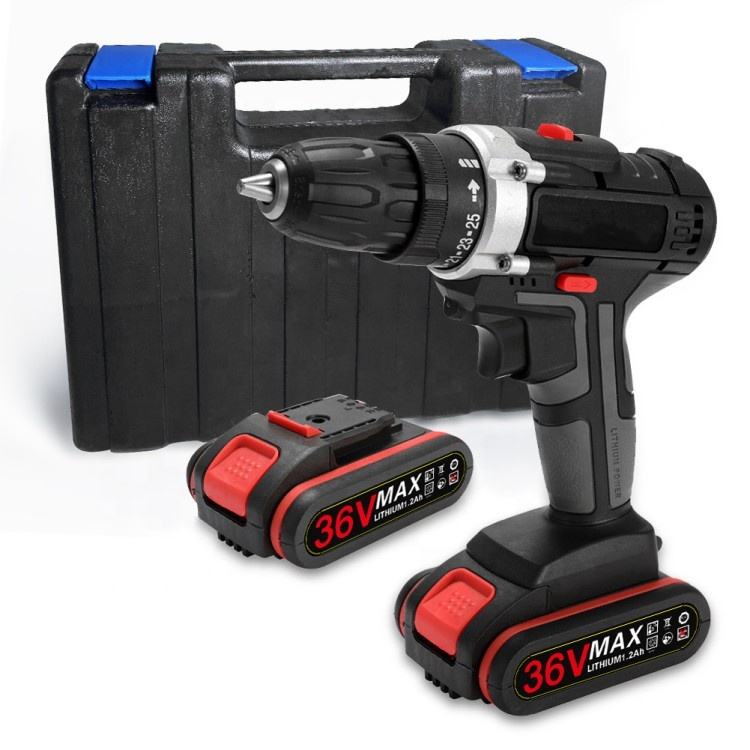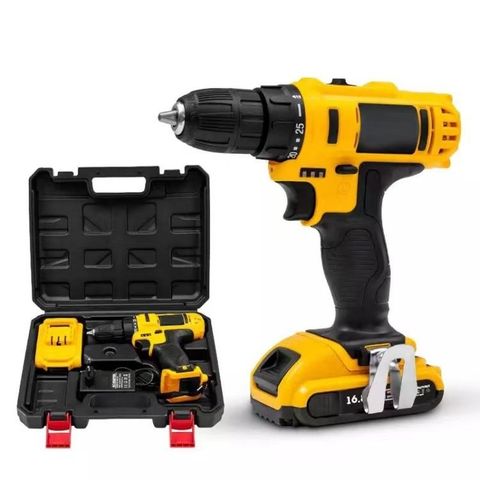
A cordless tool is one of the hardest products to price from a listing, because the shell hides almost everything that costs money. Two drills in the same category, photographed on the same background, can differ by a factor of three in unit price and both be honestly described. One has a single unbranded pack of low-capacity cells, a brushed motor, a plastic gearbox and a pressed chuck. The other has two packs of branded high-capacity cells, a brushless motor, a machined gear set and a keyless metal chuck. Neither listing has to lie for the gap to be invisible to a buyer who only compares the photograph and the number.
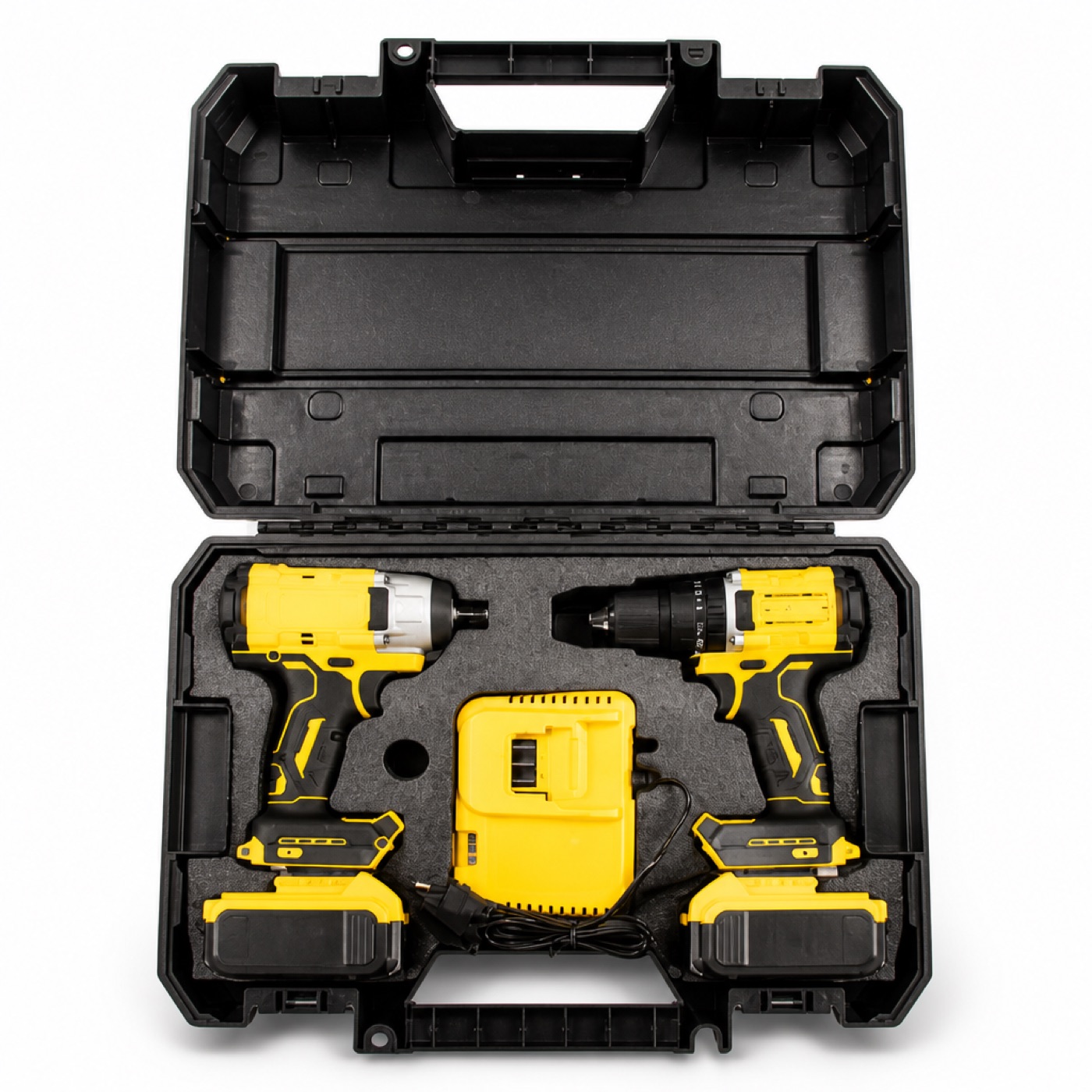
The catalogue numbers make the spread concrete. A 21V cordless screwdriver with a lithium pack is listed at US$8.00 to US$10.20 per set with a one-set minimum. A rechargeable brushless cordless hammer drill in the 12V to 21V class is listed at US$11.80 to US$15.00 per set at the same one-set minimum. A cordless drill plus impact wrench combo kit with two batteries, a charger and a carrying case is listed at US$28.00 to US$30.00 per piece. Same category, same voltage class in two of the three cases, prices that differ by more than three times. The difference is not marketing. It is a bill of materials.
The battery pack usually sets the floor
In most cordless tools the pack is the single most expensive purchased assembly, and it is also the line most often left vague. Three parameters decide its cost: cell chemistry family, cell capacity, and how many packs sit in the box. A tool sold with one pack, or with no pack at all, can carry a headline price that a two-pack configuration will never reach. Before you treat two quotations as comparable, confirm the pack count and the cell capacity in each.
Cell sourcing is the second half of that question. Branded cells from a known manufacturer and unbranded cells of the same nominal capacity are not the same product, and suppliers will normally tell you which they are using if you ask directly and in writing. Ask for the cell make, the nominal voltage, the capacity in milliamp hours, and whether the pack carries its own protection circuit. A quotation that answers those four questions is worth more than one that repeats the word high-capacity.
Motor and gearbox change the price and the warranty cost
A brushless motor costs more at the bill-of-materials level than a brushed motor, and it usually returns that cost through longer life and fewer warranty claims. The commercial question is whether your market rewards that. In a price-led retail channel where the tool is expected to be replaced rather than repaired, a brushed motor at a lower price point is a rational choice. In a trade channel where the same customer comes back for consumables, the brushless version is usually the better long-term purchase for both of you.
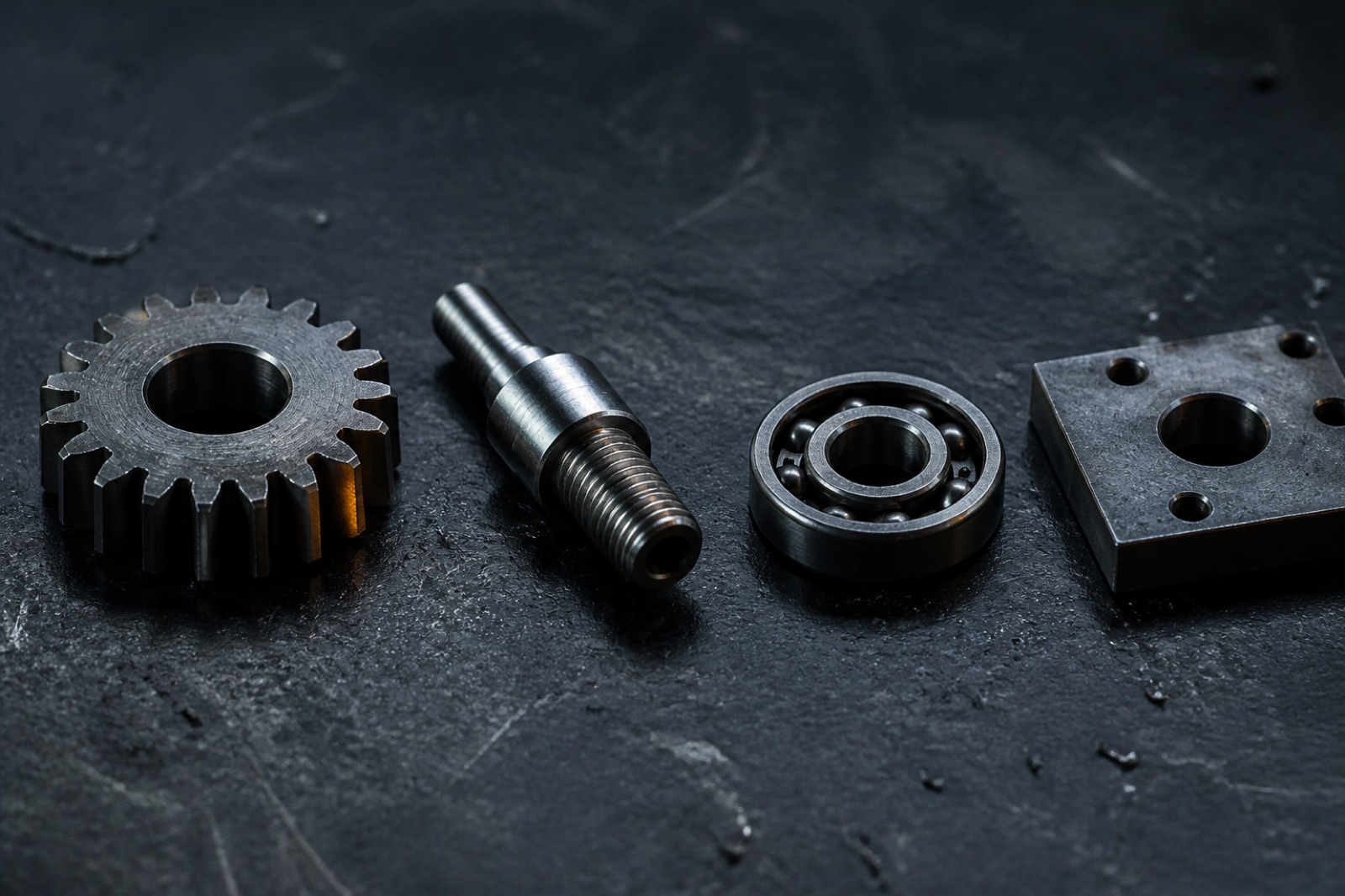
The gearbox is the line buyers forget. Plastic gear sets appear in entry-level tools and are perfectly serviceable within their load envelope, but they fail quickly when a user pushes a tool beyond it. Metal gearing, and specifically the machining quality of the first stage, is one of the clearest differences between two tools that look the same. Ask what the gear material is, and ask whether the same quotation is offered in both configurations, because a supplier who can quote both is usually a supplier who knows their own product.
If two quotations differ by more than a few percent and the specification sheets are identical, one of the specification sheets is not a specification. It is a description.
The components that quietly add or remove cost
Below the motor there is a long list of small decisions that each move the price by a little and the failure rate by a lot. Chuck type and runout, switch quality, the presence of an electronic speed control, LED work light, belt clip, and the mould quality of the housing itself. None of these will appear in a one-line product title. All of them appear in the returns rate.
- Pack configuration: number of packs, cell capacity, cell make, presence of a protection circuit.
- Motor type: brushed or brushless, and whether the controller is integrated or separate.
- Gearbox: plastic or metal gearing, and the number of stages.
- Chuck: keyed or keyless, capacity range, and stated runout.
- Switch and electronics: variable speed, forward and reverse, electronic brake, soft start.
- Charger: included or not, plug type for your market, and the marking it carries for that market.
- Packaging: colour box, moulded case, printed carton, and the accessory count that the box promises.
- Spare parts availability: whether the supplier can supply switches and packs separately after the order.
Why a listing shows a price band rather than a price
A band such as US$8.00 to US$10.20 or US$11.80 to US$15.00 is not a negotiation tactic. It usually encodes a configuration difference: with or without a pack, one pack or two, standard or upgraded accessory set, colour box or plain carton. When a supplier quotes a single number, ask which point in their own band it corresponds to. When they quote the top of the band, ask what the bottom of the band would buy. The answer tells you whether the difference is hardware or packaging, and those two are not worth the same to you.
The same logic applies to combined kits. A drill and impact wrench combo at US$28.00 to US$30.00 per piece is not directly comparable with a bare drill at a lower price, because the kit contains two tools, two packs, a charger and a case. Divide kit prices by the number of usable tools and packs before you compare them with single-tool quotations, or you will conclude that kits are expensive when they are often the cheaper way to buy two tools.
How to compare two quotations properly
Ask both suppliers for the same document, in the same format, at the same Incoterm, with the same pack configuration. Then compare line by line rather than total to total. A quotation that states the motor type, pack capacity, gear material, chuck specification, carton size and carton quantity is doing you a favour even if its price is higher, because it is the only one you can hold someone to later.
- Insist on the same pack count and cell capacity across every quotation you compare.
- Ask for the price both with and without the battery and charger, so you can see what the pack actually costs you.
- Request the carton dimensions and units per carton, because freight is part of the landed cost and a smaller carton is a real saving.
- Ask what changes if you move from one pack to two, and from a colour box to a moulded case.
- Ask for the failure rate on the switch and the pack, not the whole tool, since those are the two parts that decide your returns cost.
The cheapest quotation is rarely the cheapest tool. It is the quotation with the most unstated assumptions in it, and every one of those assumptions will be resolved in the supplier's favour when the container is already on the water. Price the tool you intend to sell, at the configuration your customer will actually open, and the comparison becomes straightforward.